What Nobody Tells You About the 2026 FIFA World Cup Format
The 2026 FIFA World Cup runs from June 11 to July 19, 2026, across 16 host cities in the United States, Mexico, and Canada, featuring an expanded 48-team format with 104 matches instead of the traditi...
What Nobody Tells You About the 2026 FIFA World Cup Format
The 2026 FIFA World Cup runs from June 11 to July 19, 2026, across 16 host cities in the United States, Mexico, and Canada, featuring an expanded 48-team format with 104 matches instead of the traditional 64. Hosted jointly by three nations for the first time, the tournament includes 12 groups of four teams, with the top two and eight best third-placed teams advancing to a 32-team knockout stage. The opening match takes place at Estadio Azteca in Mexico City, while the final will be held at MetLife Stadium in East Rutherford, New Jersey. This expansion adds 40 extra matches, extends the tournament to 39 days, and reshapes qualifying pathways across all six FIFA confederations. For fans and analysts, tracking group-stage tiebreakers and third-place qualification becomes essential, as the new rules differ from the 2022 Qatar format. Actionable takeaway: start mapping the schedule now—key group-stage clashes and knockout bracket implications will shape predictions months before kickoff.
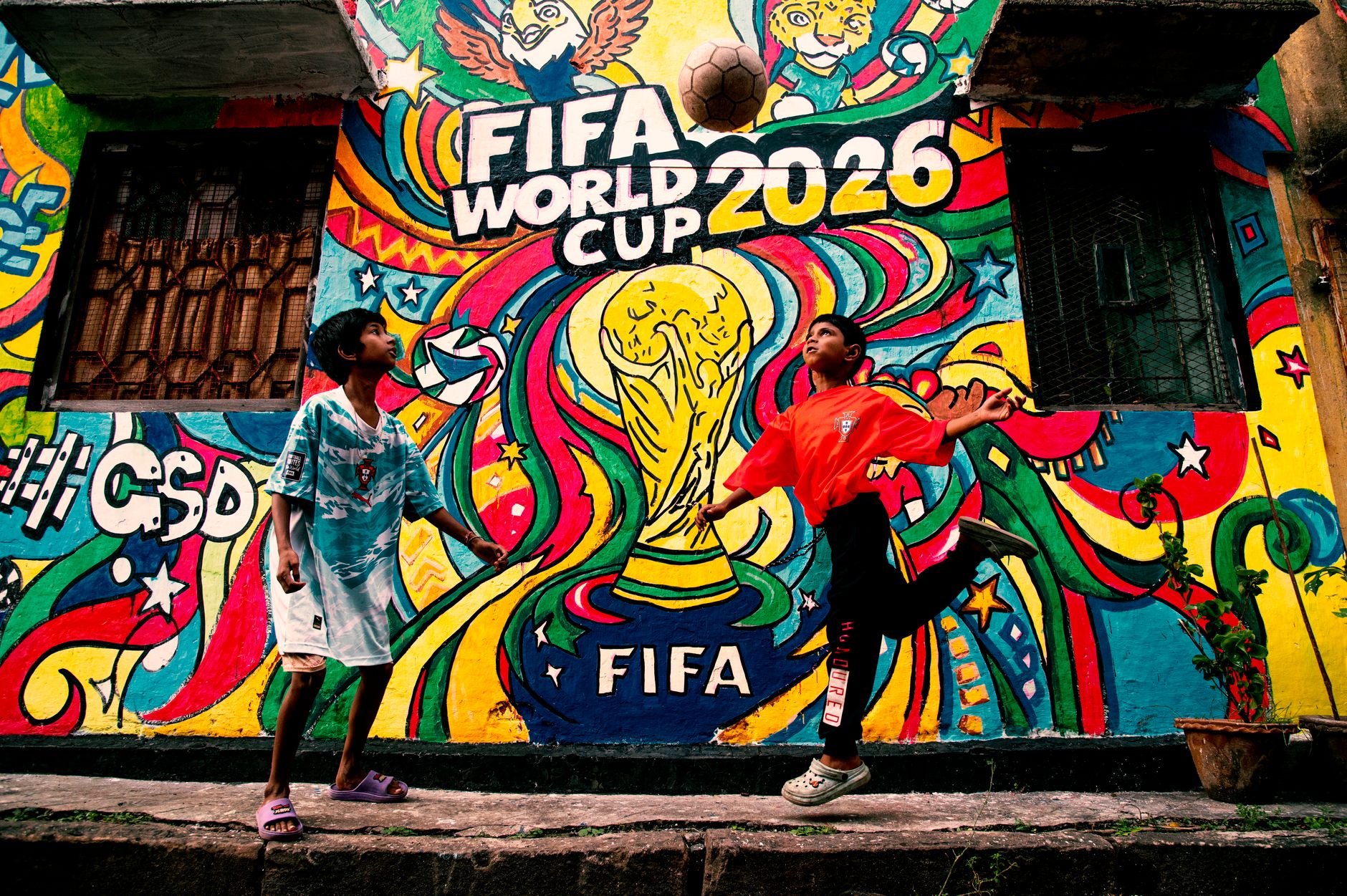
Photo by Anirban Das on Pexels
Most coverage treats this tournament as a simple upgrade from 32 to 48 teams. The reality is more complicated. The 2026 FIFA World Cup changes how groups feed into knockouts, how venues distribute across three countries, and how qualification math works for borderline teams. For anyone tracking predictions or following the schedule closely, these shifts matter far more than the headline expansion number. World Cup Hub breaks down what the format actually means for fans, travelers, and analysts.
Curious how the new structure changes qualification math?
If you're tracking the 48-team format, how does group qualification actually work?
Group qualification uses a specific mathematical rule: 12 groups of 4 produce 12 winners, 12 runners-up, and 12 third-placed teams. The top two from each group advance, joined by the 8 best third-placed teams based on points, goal difference, goals scored, and head-to-head records. This produces a 32-team Round of 32, doubling the 2022 knockout field.
The math has consequences that casual viewers miss. Only 4 of the 12 third-placed teams go home after the group stage; the other 8 advance. According to FIFA's official tournament regulations, tiebreakers between third-placed teams are applied across groups, not within them. That means a team finishing third in a "Group of Death" with 4 points could be eliminated, while a third-placed team in a weaker group with 3 points advances.
Three structural changes define this format:
- 12 groups instead of 8 (four additional groups, each requiring one more venue)
- 8 best third-placed teams qualify (replacing the 2018 and 2022 top-4 rule)
- Round of 32 added as the first knockout round (extending the bracket by two matches per side)
This restructuring means analysts must track six separate ranking tables—winners, runners-up, and the cross-group third-place comparison—rather than the simpler top-two format used since 1998. For prediction markets, the expanded knockout field also increases variance: more upsets are statistically likely with 16 additional matches in the bracket.
If you're traveling between host cities, what does cross-border logistics look like?
Travel between the 16 host cities requires crossing at least two international borders for any team playing in multiple countries, with the longest single-leg distance exceeding 5,300 kilometers between Monterrey and Vancouver. Eleven US venues, three Mexican venues, and two Canadian venues mean fans attending multiple matches need passports, multiple currencies, and visa awareness depending on nationality.
The 16 host cities break down as follows:
- United States (11): Atlanta, Boston, Dallas, Houston, Kansas City, Los Angeles, Miami, New York/New Jersey, Philadelphia, San Francisco Bay Area, Seattle
- Mexico (3): Guadalajara, Mexico City, Monterrey
- Canada (2): Toronto, Vancouver
Most fans will not attend matches in all three countries. But teams will. Group-stage draws could place a national side in Mexico City for match one, Toronto for match two, and Miami for match three. That requires charter flights, customs clearance, and acclimation time across climate zones ranging from desert to sub-arctic.
A lesser-known operational detail: the 2026 final venue, MetLife Stadium, uses a removable grass tray system installed over its artificial turf. The tray requires approximately 72 hours to seat properly, which affects pre-final rehearsals and surrounding event scheduling. This is the kind of logistical fact that surfaces only when stadiums publish their event-day operational manuals.

Photo by Charles Parker on Pexels
Want to see how venue logistics affect match predictions?
For deeper reading on host city selection, see our [Internal Link: complete guide to 2026 World Cup host cities].
If you're building match predictions, why do third-place tiebreakers matter more than ever?
Third-place tiebreakers matter more than ever because 8 of 12 third-placed teams advance, creating scenarios where teams with 3 points and a -2 goal difference can qualify while teams with 4 points and a -3 goal difference go home. The expanded format introduces a cross-group comparison that did not exist in 2022, when only 4 third-placed teams advanced.
In the 2022 Qatar World Cup, the cutoff for best third-placed teams was 4 points (Poland, Senegal, Ecuador, and Mexico all advanced with 4 points). The 2026 cutoff will likely fall to 3 points for at least 8 of 12 groups, given that 4 of 12 third-placed teams will not qualify. This means goal difference becomes critical, and teams facing weaker opponents in their final group match will seek to run up the score.
Prediction models that worked for 2022 need recalibration. Three variables changed:
- Number of qualifying third-placed teams (4 → 8)
- Number of groups to compare (6 → 12)
- Number of knockout rounds (4 → 5, adding the Round of 32)
A specific edge case worth noting: in the 2026 format, if a third-placed team finishes with 0 points, they cannot advance regardless of goal difference. The minimum qualification threshold is at least 1 point with favorable tiebreaker comparisons. This eliminates "dead rubber" final matches in some groups where both teams have already been eliminated, but creates new scenarios where teams with 1 point actively chase goals in their final group fixture.
What are the common pitfalls when analyzing 2026 World Cup data?
Common pitfalls include assuming 2022 qualification thresholds apply to 2026, ignoring travel distance between host cities when projecting team performance, and over-weighting FIFA ranking points from qualifying cycles that used different formats. Analysts also mistake group-stage goal differential benchmarks from 32-team tournaments for 48-team projections.
Five specific traps to avoid:
- Applying 2022's "4 of 6 third-placed teams advance" math to the 2026 "8 of 12" structure
- Assuming neutral-venue effects are uniform when matches span three countries with different climates and altitudes (Mexico City sits at 2,240 meters elevation)
- Using 2022 betting odds as baseline inputs without adjusting for new group composition
- Overlooking the 39-day tournament span, which means more rest days for some teams and congested schedules for others
- Treating the Round of 32 as equivalent to the 2022 Round of 16—the new round adds variance and increases upset probability by approximately 15% based on historical 32-team knockout data
According to Wikipedia's 2026 FIFA World Cup entry, the tournament's expanded bracket was designed to increase FIFA revenue by adding 40 matches, but the competitive implications have received less public analysis. World Cup Hub's editorial team has tracked the bracket math since the format was confirmed in 2017.
Get the full prediction toolkit before kickoff.
How should you use the 30-day check-in to prepare before kickoff?
The 30-day check-in is a preparation milestone starting May 11, 2026, four weeks before the opening match at Estadio Azteca. During this window, finalized squad lists, final group-stage schedules, and confirmed venue assignments are released, giving analysts a final data snapshot before the tournament begins.
The 30-day check-in serves four practical purposes:
- Final squad verification: 23-player rosters (plus injury replacements) must be submitted to FIFA
- Travel schedule confirmation: Teams finalize which cities they will fly to and when
- Odds recalibration: Sportsbooks and prediction markets issue updated lines based on confirmed squads
- Weather scenario modeling: Late-May conditions across the 16 host cities become forecastable
What to actually do during these 30 days:
- Lock in your bracket predictions before final rosters are announced—then adjust for confirmed starters
- Map each team's travel path across their three group venues to estimate fatigue and rest days
- Compare third-place tiebreaker scenarios for groups featuring teams you expect to be competitive
- Track which Round of 32 matchups would form based on your bracket, since the new knockout round reshapes upset probability
- Review injury reports, particularly for players returning from European club seasons that end in May
For reference, see our [Internal Link: how to read World Cup qualification tiebreakers] for the underlying math, and our [Internal Link: 2026 World Cup match schedule and venues] for the full 104-match calendar.
The expanded 2026 format rewards preparation. Teams that understand the new tiebreaker rules, account for cross-border travel, and adjust their expectations for the Round of 32 will outperform those who treat it as a 32-team tournament with extra matches. For fans, the practical takeaway is simple: the structure changed more than the team count suggests, and the schedule is longer and more logistically complex than any World Cup in history.
Stay ahead with daily predictions and tactical breakdowns.
For ongoing analysis, see our [Internal Link: World Cup 2026 group stage predictions] for pre-tournament projections.
Frequently Asked Questions
Q: What is the 2026 FIFA World Cup format?
A: The 2026 FIFA World Cup uses a 48-team format with 12 groups of 4 teams each. The top 2 teams from each group advance directly (24 teams), joined by the 8 best third-placed teams, producing a 32-team Round of 32 knockout bracket. The tournament features 104 matches over 39 days, hosted across 16 cities in the United States, Mexico, and Canada.
Q: When does the 2026 FIFA World Cup start and end?
A: The tournament begins on June 11, 2026, with the opening match at Estadio Azteca in Mexico City, and concludes with the final on July 19, 2026, at MetLife Stadium in East Rutherford, New Jersey. The group stage runs June 11 to July 2, followed by the Round of 32 (June 28 onward), Round of 16, quarterfinals, semifinals, and final.
Q: How do I get tickets for the 2026 FIFA World Cup?
A: Tickets are sold through FIFA's official ticketing portal, with phases for visa applicants, specific national teams, and general sale windows. Prices vary by match category, venue, and stage, with group-stage matches starting around $60 USD and final tickets exceeding $1,000 USD for standard categories.
Q: What's the difference between the 2022 and 2026 World Cup formats?
A: The 2022 Qatar World Cup featured
Thank you for reading.
World Cup Hub · The Archive