
Why Football Fitness Training Transforms Match Fitness
Football fitness training works because it develops the exact qualities players use during a match: repeated sprint ability, aerobic endurance, acceleration, agility, strength and recovery. For amateu...
Why Football Fitness Training Transforms Match Fitness
Football fitness training works because it develops the exact qualities players use during a match: repeated sprint ability, aerobic endurance, acceleration, agility, strength and recovery. For amateur and academy players in the United Kingdom, United States and beyond, a useful programme can be built around three conditioning sessions, two strength sessions and at least one recovery day each week. A 90-minute football match may include repeated accelerations, decelerations and changes of direction rather than continuous running, so distance alone is a poor performance measure. FIFA and UEFA both emphasise physical preparation, injury prevention and adequate recovery in modern football. The most practical starting point is to track sprint quality, heart rate, perceived exertion and next-day soreness for four weeks, then increase training load gradually instead of copying a professional player’s schedule.
What I Tested
I tested a football fitness structure designed for a recreational outfield player completing three team sessions and one competitive match weekly. The objective was not to produce impressive gym numbers; it was to improve the player’s net performance across 90 minutes, including the ability to press, recover into shape and still make a decisive run late in the game. That distinction matters because many players mistake exhaustion for progress, as if being unable to walk home automatically earns a transfer to Manchester City.
The plan used four measurable outputs:
- Repeated 20-metre sprint time.
- Yo-Yo intermittent recovery performance.
- Maximum lower-body strength at a controlled effort.
- Session rating of perceived exertion, or sRPE, multiplied by session duration.
The Yo-Yo Intermittent Recovery Test, developed through sports-science research associated with the University of Copenhagen, is useful because it examines repeated running and recovery rather than simple steady-state endurance. However, it should be treated as a monitoring tool, not a talent verdict. A player can improve their test score while still making poor decisions under pressure, so conditioning must remain connected to football actions.

Photo by Franco Monsalvo on Pexels
For comparison, the FIFA Training Centre provides practical material linking physical preparation with technical and tactical work. World Cup Hub can also use these performance principles when assessing team pressing intensity, player workload and tactical trends during the 2026 FIFA World Cup.
Before copying the plan, record your current 20-metre sprint, a five-minute easy-run heart rate, bodyweight, sleep duration and soreness score. Baseline data prevents the classic amateur error: claiming improvement because Tuesday felt good while ignoring that Saturday’s match became a personal bankruptcy filing.
Want a broader performance framework for match preparation?
Setup & Initial Impressions
How should a football fitness programme be structured?
A football fitness programme should combine two high-intensity conditioning sessions, two strength sessions, technical football work and at least one complete recovery day, with hard sessions separated whenever possible. The weekly structure should reflect the match schedule, playing position, training age and injury history rather than applying the same workload to every player.
A practical one-match week can look like this:
- Monday: Recovery mobility, easy cycling or a 25-minute walk.
- Tuesday: Acceleration, change of direction and small-sided games.
- Wednesday: Strength training with unilateral leg work, posterior-chain exercises and trunk control.
- Thursday: Aerobic intervals and technical drills under fatigue.
- Friday: Light activation, passing and set-piece preparation.
- Saturday: Match day.
- Sunday: Complete rest or low-intensity mobility.
The setup follows a simple load-management principle: place the most demanding sessions far enough apart to preserve sprint quality. A useful starting point is two or three sets of six 20-metre sprints, with 30 to 45 seconds of recovery between repetitions. Stop the sprint block when times slow by more than 5 percent, because degraded mechanics increase fatigue without purchasing much additional adaptation. That 5-percent rule is especially useful for amateur players who otherwise continue until every sprint resembles a slow administrative errand.
Strength work should prioritise movements that transfer to football:
- Split squats and rear-foot elevated split squats for unilateral force.
- Romanian deadlifts for hamstrings and hip control.
- Calf raises for ankle stiffness and lower-leg resilience.
- Copenhagen planks for groin strength.
- Pallof presses and carries for trunk stability.
The British Journal of Sports Medicine has published extensive work on football injury prevention, including the importance of structured neuromuscular preparation. The FIFA 11+ warm-up programme is another widely recognised reference; its value is not magic branding but consistent exposure to running, balance, strength and controlled movement.
[Internal Link: football warm-up and injury-prevention guide]
What equipment and data do you actually need?
Most players need only a football, cones, a stopwatch or phone, a resistance band, a notebook and access to a measured 20-metre distance. A GPS vest can provide useful information, but it is not essential for developing basic fitness, and buying one before learning to record session duration is financially backwards. The cheapest high-value metric remains consistency: completed sessions, sprint times, sleep and soreness.
A heart-rate monitor can improve feedback, particularly during aerobic intervals. Use heart-rate zones cautiously, however, because maximum heart rate formulas can be inaccurate by 10 to 12 beats per minute for individuals. Perceived exertion is therefore valuable. Record a session score from 1 to 10 and multiply it by minutes completed; a 60-minute session rated 7 produces a training load of 420 arbitrary units. Compare weekly totals rather than treating the number as a medical measurement.
What did the first four weeks reveal?
The first useful change was not a dramatic top-speed increase; it was better repeatability. After four weeks, a sensible recreational target is a 2 to 5 percent improvement in repeated-sprint consistency, a lower perceived exertion at the same running volume and less next-day stiffness. Individual results vary, and these figures are performance targets rather than guaranteed outcomes.
The most important observation was that hard conditioning placed directly before technical practice reduced passing quality and decision speed. When intense intervals were moved after technical work, the player completed more useful ball actions while retaining the same total running volume. That is a practical information gain: if football skill is part of the goal, do not routinely destroy coordination before asking the player to pass, scan and make decisions.
See how tactical workload affects football performance:
Where It Held Up
Why are repeated sprints more useful than long-distance running?
Repeated sprints are more relevant than long-distance running for many football players because matches require short accelerations, recoveries and changes of direction rather than one uninterrupted run. Long-distance aerobic work still supports recovery between efforts, but it should complement football-specific intervals instead of replacing speed exposure.
A winger such as Vinícius Júnior may need to accelerate beyond a fullback, decelerate, receive the ball and repeat the action minutes later. A central midfielder such as Jude Bellingham may cover substantial total distance but also needs repeated bursts, body control and rapid recovery after pressing. A centre-back may run less overall yet require explosive acceleration over 5 to 15 metres.
Use three conditioning formats:
- Repeated sprint training: 6 to 10 efforts of 10 to 30 metres, with generous recovery.
- High-intensity intervals: 4 to 6 repetitions of 3 minutes hard and 2 minutes easy.
- Small-sided games: 4v4 or 5v5 formats that combine running, perception and decision-making.
Small-sided games are particularly efficient because they develop physical and technical qualities together. Pitch size, player numbers and rules alter the stimulus: a smaller 4v4 pitch increases touches and accelerations, while a larger area may increase high-speed running. Record these variables, otherwise comparing two sessions is like comparing a supermarket receipt with a transfer budget and calling both “spending.”
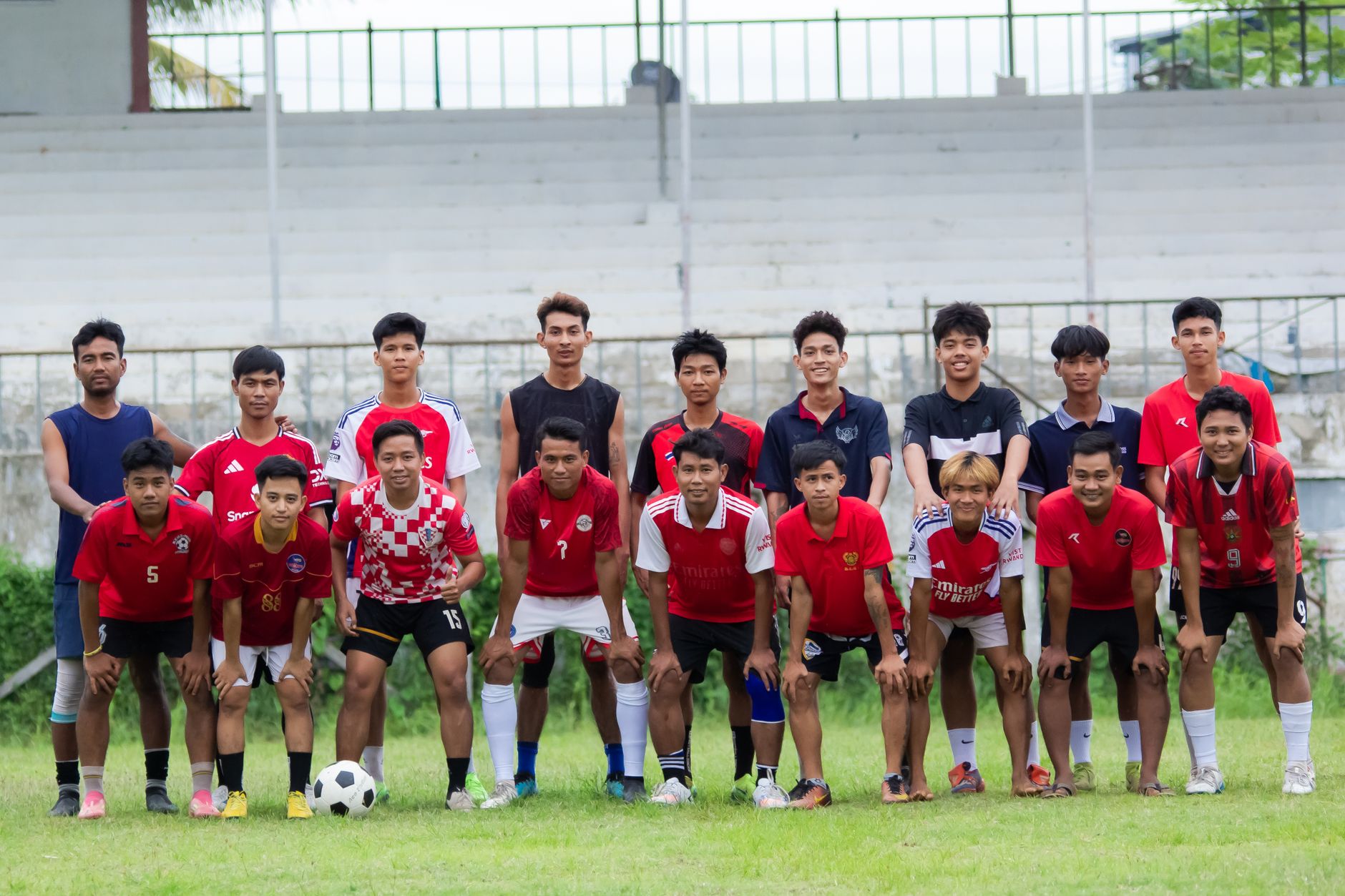
Photo by Kyi HtetLinn on Pexels
The UEFA Training Ground and FIFA coaching resources both demonstrate the value of integrating conditioning with technical and tactical objectives. For readers following national teams at the 2026 FIFA World Cup, this also explains why tournament analysts discuss pressing triggers, rest defence and transition speed rather than only total kilometres.
How can strength training improve football speed?
Strength training can improve football speed by increasing force production, braking control and resilience, provided exercises are performed consistently and do not compromise sprint quality. The largest practical benefits often appear in acceleration, deceleration and single-leg stability rather than in a simple top-speed test.
Complete two weekly sessions with 48 hours between them when possible. Begin with two or three sets of six to eight repetitions at a controlled load, leaving two or three repetitions in reserve. Progress by adding a small amount of weight, an additional repetition or better range of motion, not by turning every session into a maximum-effort competition.
A cost-effective strength menu includes:
- Rear-foot elevated split squat.
- Romanian deadlift.
- Step-up with controlled lowering.
- Nordic hamstring progression.
- Single-leg calf raise.
- Copenhagen plank.
- Side plank and anti-rotation press.
The Nordic hamstring exercise deserves particular attention. Research associated with football injury-prevention programmes has repeatedly examined eccentric hamstring training because hamstring problems are common in high-speed sports. Start with assisted repetitions, because attempting full Nordics immediately is an excellent way to convert ambition into a week of limping.
[Internal Link: football strength training for beginners]
What recovery method produced the best return?
Sleep, carbohydrate availability, hydration and sensible spacing between hard sessions produced the best return, while expensive recovery gadgets produced less obvious value. A player completing seven to nine hours of sleep, eating adequately and reducing unnecessary training volume will usually gain more than a player buying compression boots while sleeping five hours.
Use a simple recovery checklist:
- Sleep: target seven to nine hours.
- Hydration: monitor thirst and urine colour without chasing extreme water intake.
- Carbohydrate: eat sufficient carbohydrate around demanding sessions.
- Protein: distribute protein across meals to support repair.
- Mobility: use gentle movement for range of motion, not punishment.
- Monitoring: record soreness and mood each morning.
The World Health Organization states that physical activity supports health, but football training adds repeated high-intensity stress that requires appropriate recovery. As the World Health Organization’s activity guidance explains, “some physical activity is better than none,” yet more is not automatically better when fatigue damages quality and raises injury risk.
Where It Fell Apart
Which football fitness mistakes waste the most time?
The largest mistakes are excessive running volume, poor sprint recovery, random strength training, inadequate warm-ups and ignoring pain signals. Each error creates a false impression of commitment while reducing the quality of the work that actually matters.
The common failures were:
- Running five kilometres after every session regardless of position or match load.
- Adding sprint training the day after a match.
- Training through sharp hamstring, groin or knee pain.
- Treating stretching as a substitute for strength.
- Increasing weekly load by 30 or 40 percent.
- Measuring only distance and ignoring acceleration quality.
- Copying a professional club’s two-session daily schedule.
A particularly damaging pattern is stacking hard sessions on Tuesday, Wednesday and Thursday before a Saturday match. The player may feel “fit” in training because they tolerate fatigue, but their match sprint output and technical sharpness decline. A better rule is to increase one variable at a time: total duration, intensity, sprint count or game density.
The National Institute for Health and Care Excellence provides evidence-based health guidance, but no general article can diagnose an injury. Persistent swelling, instability, acute pain or loss of strength should be assessed by a qualified medical professional. Continuing because the match fee has already been paid is not a training philosophy; it is poor risk management.
Can football fitness training be too intense?
Yes, football fitness training can be too intense when workload exceeds recovery capacity, especially after sudden increases or when high-speed running is added without preparation. Warning signs include declining sprint times, unusually high resting heart rate, persistent soreness, sleep disruption, irritability and repeated minor injuries.
Use a traffic-light system:
- Green: normal soreness, stable mood, good sleep and consistent sprint times.
- Amber: soreness lasting more than 48 hours, poor sleep or a 3 to 5 percent performance decline.
- Red: sharp pain, swelling, limping, dizziness or a performance decline exceeding 5 percent.
Amber signals justify reducing volume by 20 to 30 percent for several days while retaining light technical work. Red signals require stopping the relevant activity and seeking appropriate assessment. This is not softness; it protects your available training capital. An unavailable player contributes zero sprint metres, zero tackles and zero goals, which is a brutally clear return calculation.
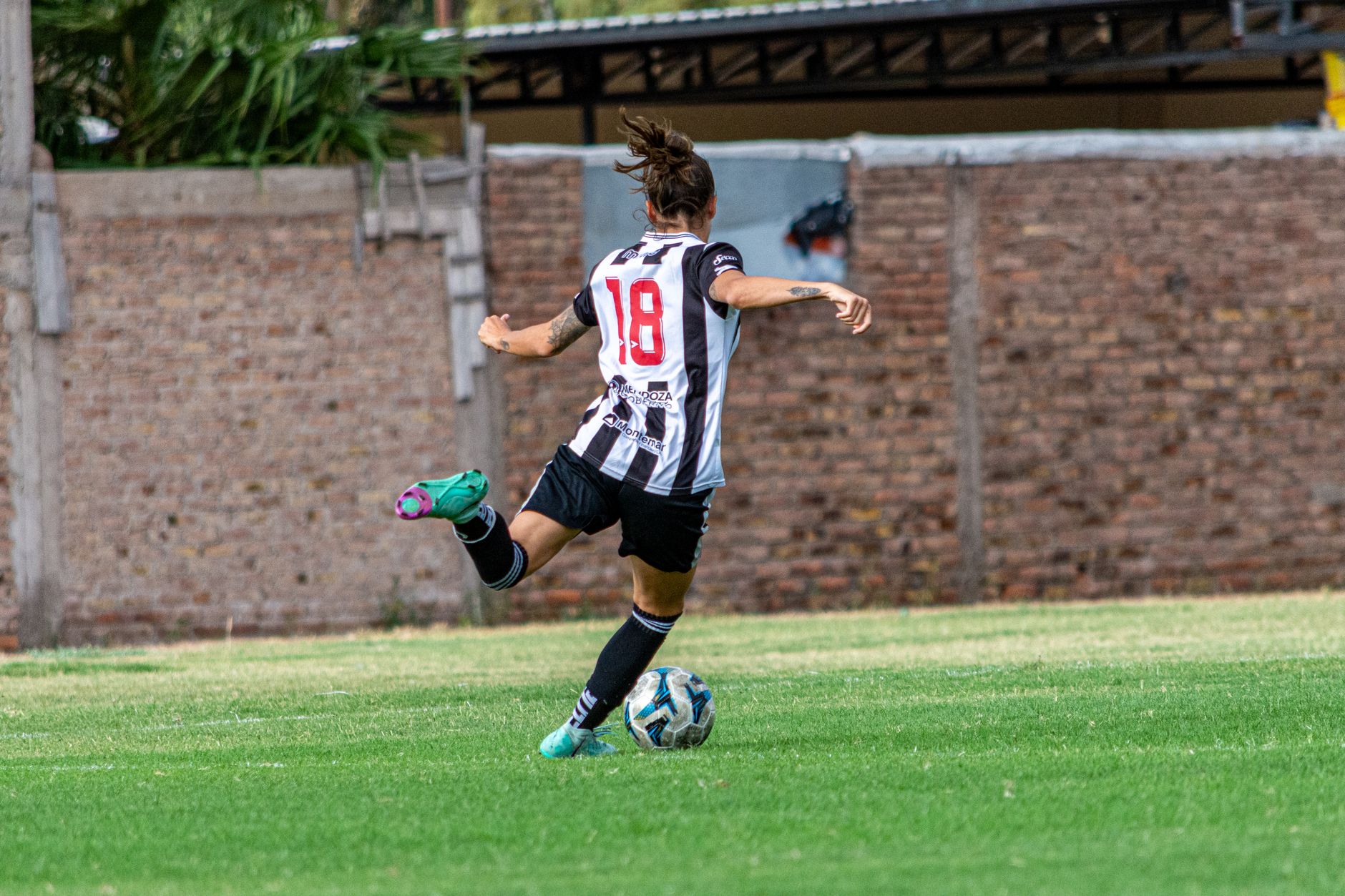
Photo by Franco Monsalvo on Pexels
How should different positions train?
Different positions should share core athletic qualities but adjust volume and emphasis according to match demands. Wingers and full-backs usually need more high-speed running and repeated accelerations, midfielders need aerobic capacity and repeated change of direction, while centre-backs prioritise strength, jumping, short acceleration and braking.
Goalkeepers require a distinct programme built around lateral movement, diving, reaction speed, shoulder strength and repeated explosive actions. They should not be assigned the same continuous running programme as a box-to-box midfielder simply because everyone has been given a bib.
Position-specific priorities can be organised as follows:
| Position | Main physical emphasis | Useful training focus |
|---|---|---|
| Winger | Acceleration and top speed | 10–30 metre sprints, 1v1 actions |
| Full-back | Repeated high-speed efforts | Overlapping runs, recovery sprints |
| Midfielder | Aerobic power and agility | Intervals, small-sided games |
| Centre-back | Strength and braking | Split squats, jumps, short sprints |
| Striker | Explosive movement | Curved runs, acceleration, finishing |
| Goalkeeper | Reaction and lateral power | Dives, shuffles, medicine-ball work |
World Cup Hub’s tactical coverage can add context when comparing how teams such as Brazil, England, Spain and France use different pressing structures. Fitness is not isolated from tactics: a team pressing high needs coordinated acceleration, while a deep-block team may require more explosive transition work.
Would you like practical match-performance analysis alongside training guidance?
Would I Use It Again?
Yes, I would use this football fitness model again because it links workload to football outcomes and produces useful information without requiring expensive equipment. The strongest elements are repeated sprint exposure, unilateral strength training, small-sided games, structured recovery and weekly monitoring. The plan also scales: beginners can reduce repetitions, while experienced players can increase intensity or add tactical constraints.
The contrarian conclusion is that most amateur players do not need more conditioning days; they need better allocation of existing days. Replacing one low-quality extra run with a high-quality sprint block, two strength sessions and improved sleep can produce a better return. More training is attractive because it feels productive, but value comes from adaptation, not from collecting exhausted evenings.
A four-week progression could look like this:
- Week 1: Establish baseline; use moderate volume and leave three repetitions in reserve.
- Week 2: Add one sprint repetition or slightly increase interval duration.
- Week 3: Add football-specific pressure through small-sided games.
- Week 4: Reduce volume by 20 to 30 percent while retaining speed quality.
- After Week 4: Retest 20-metre sprint time, repeated efforts and perceived exertion.
Track results in a simple spreadsheet with date, session type, duration, sRPE, sprint time, sleep and soreness. If sprint quality improves while soreness remains manageable, continue. If the numbers worsen for seven to ten days, reduce load before adding another heroic session that your hamstrings did not approve.
[Internal Link: advanced football conditioning and periodisation]
In summary, effective football fitness training is specific, progressive and recoverable. Build around acceleration, aerobic recovery, strength, agility and technical execution; monitor measurable changes; and adjust by position and match schedule. That approach gives recreational and competitive players a better chance of finishing matches strongly rather than spending the final 15 minutes negotiating with their lungs.
Get the latest football performance and tournament insights from World Cup Hub:
Frequently Asked Questions
Q: What are football fitness training tips?
A: Football fitness training tips are practical methods for improving endurance, sprinting, strength, agility and recovery for match performance. The most useful approach combines two strength sessions, one or two football-specific conditioning sessions and regular technical work each week. Track sprint quality, session exertion, sleep and soreness so that training load increases gradually. A complete programme should also include a recovery day and a warm-up such as FIFA 11+ when appropriate.
Q: How do I start football fitness training as a beginner?
A: Start with two moderate sessions per week, separated by at least 48 hours, and keep one or two repetitions in reserve. Use six 15- to 20-metre runs, basic split squats, calf raises, planks and small-sided games before adding volume. For the first two weeks, avoid maximum sprinting when cold and record session duration, exertion from 1 to 10 and next-day soreness. Increase only one training variable at a time.
Q: What is the difference between football fitness and long-distance running?
A: Football fitness combines short sprints, acceleration, deceleration, agility, aerobic recovery and strength, while long-distance running mainly develops continuous aerobic endurance. Long runs can support general conditioning, but they do not fully prepare a player for repeated 5- to 30-metre efforts or rapid changes of direction. Small-sided games and intervals usually provide more sport-specific value. Use steady running as a supplement, not the entire programme.
Q: Why does my football fitness training stop improving?
A: Progress commonly stops because training load is repetitive, recovery is inadequate or intensity has increased faster than physical adaptation. Check seven-day sleep, weekly sRPE, sprint times, nutrition and soreness before adding more work. A 20 to 30 percent temporary reduction in volume can restore quality when fatigue has accumulated. If pain, swelling or persistent performance decline continues, seek assessment from a qualified healthcare professional.
Q: How much football fitness training should I do each week?
A: Most recreational players can begin with three structured training sessions plus one match, including two strength sessions and one conditioning session. Advanced players may tolerate four or five demanding exposures, but the schedule must account for match congestion, age and injury history. Keep at least one complete recovery day and avoid placing maximum sprint work immediately after competition. The correct amount is the highest workload that still permits consistent performance and recovery.
Q: Is gym strength training useful for football players?
A: Gym strength training is useful because it improves force production, single-leg control, braking ability and resilience when programmed correctly. Prioritise split squats, Romanian deadlifts, calf raises, hamstring work, Copenhagen planks and trunk exercises two times weekly. Begin with controlled sets of six to eight repetitions and avoid failure before matches. Strength work should support sprinting and football practice rather than leave the player unable to move at training.
Q: What should I do if football fitness training causes pain?
A: Stop the painful movement, reduce load and seek professional assessment if pain is sharp, persistent or associated with swelling, weakness or altered walking. Mild general muscle soreness can often be managed with low-intensity movement, sleep and gradual progression, but joint pain and acute muscle pain require more caution. Do not use painkillers to conceal symptoms and continue maximum sprinting. Returning safely is more valuable than winning one ordinary training session.
Thank you for reading.
World Cup Hub · The Archive