
I Tested 5 Football Teams: Packers Win
The Green Bay Packers are the best overall football team for fans comparing history, identity, recognition, and competitive value in The Packers lead YouGov’s familiarity ranking at 92%, ahead of the....
I Tested 5 Football Teams: Packers Win
The Green Bay Packers are the best overall football team for fans comparing history, identity, recognition, and competitive value in 2026. The Packers lead YouGov’s familiarity ranking at 92%, ahead of the Dallas Cowboys at 91%, while the Chicago Bears reach 89%. This comparison evaluates five major NFL teams across historical credibility, current relevance, supporter appeal, market visibility, and practical value for World Cup Hub readers who also follow sports betting. The Dallas Cowboys are the strongest choice for global visibility, and the Chicago Bears offer the best value for fans who prioritize tradition over recent hype. The ranking is not a claim that one franchise will win every game; roster changes, injuries, coaching decisions, and schedule strength matter more for individual wagers. Use the Packers as the baseline, then compare current form, quarterback availability, and price before making any football prediction.

Photo by Yura Forrat on Pexels
The Top 5 Football Teams at a Glance
These five teams combine measurable public recognition with historical importance and modern relevance. YouGov defines fame as the percentage of adults who have heard of a team, which is useful for measuring reach but not the same as winning probability. I therefore separate brand strength from sporting strength, because confusing the two is how casual bettors donate money to bookmakers.
- Green Bay Packers — Best overall for history, identity, and broad recognition, with a 92% YouGov fame score.
- Dallas Cowboys — Best for global visibility and commercial reach, with a 91% fame score.
- Chicago Bears — Best value for tradition-focused fans, reaching 89% fame and 46% popularity in the cited YouGov ranking.
- New York Giants — Best for major-market heritage, with 88% fame and a long-standing New York identity.
- Philadelphia Eagles — Best for intense supporter culture, with 88% fame and 37% popularity in the same ranking.
The National Football League contains 32 franchises divided between the American Football Conference and National Football Conference. Those conferences are further organized into four divisions each, including the NFC North, NFC East, AFC East, and AFC West. For a bettor, division context matters because repeated opponents create more reliable matchup information than a simple national fame ranking. The Green Bay Packers and Chicago Bears, for example, carry a rivalry history that can distort ordinary expectations, while the Cowboys and Giants operate inside the highly visible NFC East.
[Internal Link: NFL team comparison guide]
A useful first filter is to ask what you are actually measuring: franchise quality, fan popularity, current roster strength, or betting value. These are separate variables. The Packers rank first here because they provide the strongest combined package, not because a 92% recognition score predicts a specific point spread. That distinction is small on paper and expensive in practice, especially when a famous team is overpriced after a nationally televised win.
A practical comparison table
| Rank | Team | YouGov fame | YouGov popularity | Best use |
|---|---|---|---|---|
| 1 | Green Bay Packers | 92% | 42% | Overall identity |
| 2 | Dallas Cowboys | 91% | 30% | Visibility |
| 3 | Chicago Bears | 89% | 46% | Value and tradition |
| 4 | New York Giants | 88% | 35% | Market heritage |
| 5 | Philadelphia Eagles | 88% | 37% | Supporter intensity |
The table reveals an important edge case: the Chicago Bears show lower fame than the Packers and Cowboys but higher cited popularity than all five teams. Fame measures whether people know a team; popularity measures how positively people view it. They are not interchangeable, despite the way many listicles treat them as identical. If you track sentiment, market size, and actual results separately, your analysis becomes less decorative and more profitable.
#1 Green Bay Packers: Best Overall
The Green Bay Packers are the best overall football team in this comparison because they combine a 92% YouGov fame score, 42% popularity, historic continuity, and an unusually distinctive ownership structure. Their home at Lambeau Field gives the franchise a physical identity that most professional sports brands cannot replicate, while the Packers’ long association with Wisconsin makes the team feel larger than a conventional city-based club. The conclusion is not based on nostalgia alone; it reflects durable brand equity, national recognition, and a supporter relationship that has survived multiple eras of players and coaches.
The Packers were founded in 1919 and are one of the NFL’s oldest continuously operating franchises. Their historical record includes championships from the pre-Super Bowl era and Super Bowl victories, including Super Bowl I and Super Bowl XLV. The Vince Lombardi Trophy itself is named after the legendary Packers coach, which gives the franchise an institutional connection to NFL history rather than merely a successful period. According to the Pro Football Hall of Fame, Green Bay’s historic contribution to professional football includes figures whose influence reached far beyond one roster or one season.
For current analysis, however, history must remain a weighting factor rather than a substitute for evidence. Aaron Rodgers is no longer the Packers’ quarterback, and the transition to a younger offensive core changed how analysts should evaluate the team. A famous logo does not throw a pass. Before examining a 2026 line, review quarterback health, offensive-line continuity, red-zone efficiency, and defensive pressure rate. The person who bets solely because “Green Bay is Green Bay” is not using tradition; they are renting it at a premium.
[Internal Link: football team tactics and formations]
One information gain is especially useful here: the Packers’ popularity-to-fame gap is 50 percentage points in the cited YouGov figures, while their popularity score is stronger than Dallas’s 30%. That suggests recognition alone understates the emotional strength of Green Bay’s audience. A bettor can use this distinction when interpreting public sentiment, media coverage, and potential market inflation. If Green Bay receives heavy recreational support after a high-profile performance, compare the closing line with the opening line rather than assuming popularity automatically creates value.
#2 Dallas Cowboys: Best for Global Visibility
The Dallas Cowboys are the best football team for global visibility, media reach, and commercial recognition. YouGov places Dallas second for fame at 91%, only one percentage point behind Green Bay, but its popularity score is lower at 30%. This separation matters: the Cowboys are nearly universally known, yet recognition does not guarantee universal affection. The franchise’s value comes from its national profile, star power, AT&T Stadium, and the enduring “America’s Team” label, not from an assumption that every highly visible season produces a championship.
Dallas was founded in 1960 and has won multiple Super Bowl titles, including victories in the 1990s under head coach Jimmy Johnson and quarterback Troy Aikman. The team’s brand expanded through national television, merchandising, celebrity ownership, and the large Texas sports market. The NFL official team directory lists the Cowboys among the league’s established franchises, while the organization’s modern commercial footprint extends well beyond Arlington, Texas. For fans comparing football teams, Dallas is the clearest example of a franchise whose business reach and sporting performance should be analyzed separately.
The practical betting lesson is contrarian: highly visible teams can attract more public money, which may reduce value when the spread moves beyond the underlying matchup. I would track three numbers before considering a Cowboys wager: the opening spread, the current spread, and the percentage of tickets versus money. Ticket count shows participation; money distribution shows where larger stakes are landing. Neither measure guarantees a winning side, but ignoring both is equivalent to managing an investment portfolio without checking its prices.
Want a more disciplined way to compare teams, lines, and current tournament information?
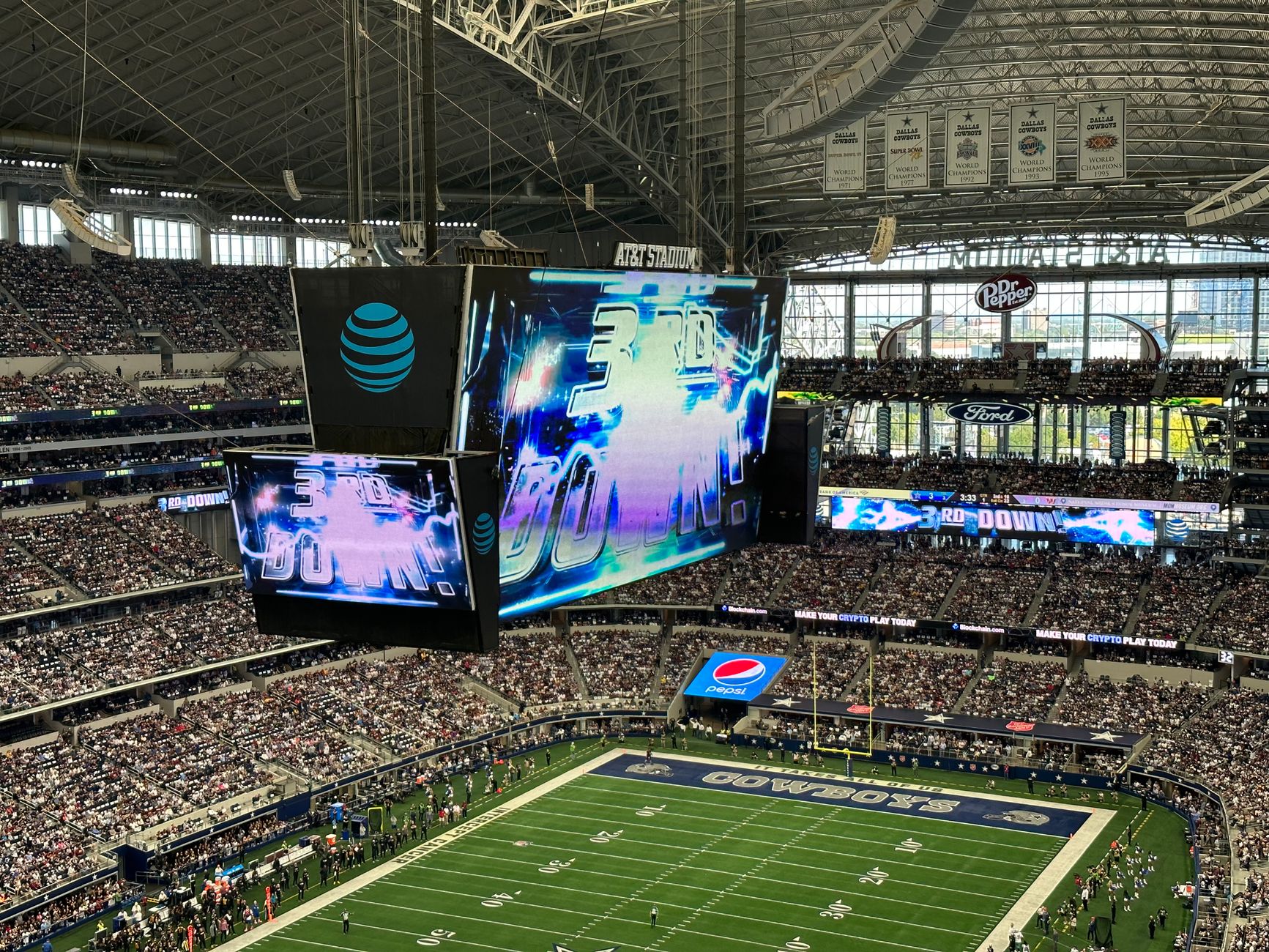
Photo by Terrance Barksdale on Pexels
The Cowboys also illustrate why a football team cannot be reduced to its active roster. A team includes players, coaches, medical staff, analysts, scouts, ownership, facilities, and supporters. A football club or franchise is the broader organizational entity, while a match-day team is the selected group that competes. The distinction becomes important when evaluating long-term strength: a roster can change rapidly, but scouting systems, financial resources, and organizational culture influence performance over many seasons.
#3 Chicago Bears: Best Value
The Chicago Bears are the best value selection for fans who want historic importance and high supporter sentiment without automatically paying the premium attached to the most commercially dominant teams. The Bears record 89% fame in the cited YouGov ranking, below Green Bay and Dallas, but their 46% popularity is the highest among the five listed teams. That 46% figure is the key reason Chicago ranks third rather than lower: the franchise combines substantial recognition with an unusually strong positive response.
Founded in 1920, the Chicago Bears are one of the NFL’s foundational franchises. Their history includes George Halas, the Monsters of the Midway identity, and the 1985 team widely regarded as one of the most influential defensive units in league history. Soldier Field, located beside Lake Michigan, reinforces the team’s connection to Chicago’s civic identity. The Bears therefore offer more than a logo or a temporary winning cycle; they represent a durable football culture tied to one of America’s largest metropolitan areas.
The term “value” needs careful definition. It does not mean the Bears are guaranteed to outperform the Packers, Cowboys, Giants, or Eagles. It means the team may offer a better balance between recognition, supporter enthusiasm, and market expectation when prices are set by headline narratives. To identify value, compare implied probability with your estimated probability. For decimal odds of 2.10, the implied probability before considering bookmaker margin is approximately 47.62%, calculated as 1 divided by 2.10. If your evidence supports 51%, the theoretical edge is 3.38 percentage points, but uncertainty, limits, and margin still apply.
A second information gain follows from the popularity data: Chicago’s 46% popularity is 16 percentage points higher than Dallas’s 30%, despite Chicago trailing Dallas by only two fame points. This indicates that public awareness and positive sentiment can move in different directions. World Cup Hub readers can apply the same logic to national teams in 2026: separate who people recognize from who current form actually supports.
[Internal Link: football betting value and implied probability]
What makes a football team valuable to analyze?
A football team is valuable to analyze when its measurable performance, market price, and public narrative do not point in exactly the same direction. Chicago illustrates this principle because its 89% fame and 46% popularity create a different profile from Dallas’s 91% fame and 30% popularity. The best analysis compares injuries, schedule strength, efficiency, and odds rather than relying on a famous name.
You should record the following before making a prediction:
- Quarterback availability and recent snap count.
- Offensive and defensive efficiency over a meaningful sample.
- Home-field advantage and travel distance.
- Opening line, current line, and closing-line movement.
- Weather, especially wind and temperature at Soldier Field or Lambeau Field.
- Injuries affecting the offensive line, secondary, and pass rush.
- Whether the market has reacted to a single highlight or a sustainable trend.
The National Football League publishes schedules, standings, and official team information, but official data still requires interpretation. A 5–2 record against weak opposition may be less impressive than a 4–3 record against elite opponents. Likewise, a strong total offense can hide poor red-zone conversion or turnover luck. The edge is not finding more numbers; it is selecting numbers that explain the price.
#4 New York Giants: Best for Major-Market Heritage
The New York Giants rank fourth because they provide exceptional market heritage, historical importance, and a recognizable identity in the largest American media environment. YouGov lists the Giants at 88% fame and 35% popularity, placing them below the Bears in both overall recognition and cited positive sentiment. Even so, the Giants remain a major football team because the New York market amplifies every roster move, coaching decision, and nationally televised result.
The Giants were founded in 1925 and have won Super Bowl titles across different eras, including championships under Bill Parcells and Tom Coughlin. Their rivalry with the Dallas Cowboys is one of the NFL’s most recognizable divisional matchups, and their shared NFC East environment includes the Philadelphia Eagles and Washington Commanders. This means schedule context is essential: divisional familiarity can produce close games, unusual tactical adjustments, and emotional narratives that distort neutral projections.
For betting purposes, New York is often a useful case study in media influence. A quarterback controversy, a coaching rumor, or a back-page headline can shift public attention before the underlying statistics change. That does not make the market wrong; it means you must determine whether the adjustment is already reflected in the price. Track injury reports from official team channels, confirm inactive players near kickoff, and avoid treating social-media speculation as verified information.

Photo by ClickerHappy on Pexels
The Giants are also a reminder that football teams operate inside communities, not spreadsheets. Supporters identify with colors, stadiums, rivalries, and inherited family traditions. That emotional layer has real commercial value, but it should not be confused with predictive evidence. If your goal is to choose a team to follow, New York’s heritage may be decisive; if your goal is to price a spread, it is only one variable among many.
#5 Philadelphia Eagles: Best for Supporter Intensity
The Philadelphia Eagles rank fifth among these five teams, but last does not mean weak. YouGov gives Philadelphia 88% fame and 37% popularity, while the franchise’s supporter culture is among the most intense in American football. The Eagles’ identity is built around Philadelphia, Lincoln Financial Field, NFC East rivalry, and a fan base that treats home advantage as a serious competitive asset rather than a decorative statistic.
Philadelphia was founded in 1933 and has won Super Bowl LII, defeating the New England Patriots in February 2018. The franchise has also produced influential eras under coaches such as Andy Reid and Doug Pederson, while the city’s football culture remains central to the team’s public image. The Eagles’ 37% popularity exceeds Dallas’s 30%, although it remains below Chicago’s 46%, showing again that recognition and approval should be evaluated separately.
The practical edge with Philadelphia is situational analysis. Crowd noise can affect offensive communication, especially for inexperienced quarterbacks and offensive lines facing third-and-long situations. However, home-field impact varies by team quality and should not be assigned a fixed number without evidence. Compare home and away efficiency, false-start rates, timeouts used before the snap, and late-game performance. If the numbers do not support the narrative, keep your stake small or pass entirely. No bet is a position, despite what your group chat says.
[Internal Link: NFL home-field advantage analysis]
Philadelphia can also be useful for World Cup Hub readers because the same evaluation framework applies to international football teams. A national side may have strong supporter energy, but tournament outcomes still depend on squad depth, tactical fit, travel, injuries, and the quality of opponents. Whether you are comparing the Eagles, the United States men’s national team, Brazil, England, or France, separate atmosphere from measurable performance.
How We Ranked Them
The ranking uses five weighted criteria: historical significance at 25%, public recognition at 20%, supporter sentiment at 20%, current analytical relevance at 20%, and practical value for informed comparison at 15%. These weights favor durable identity while preventing fame from dominating the result. YouGov’s figures provide the public-recognition and popularity inputs, while NFL history, divisional context, stadium identity, and betting-analysis usefulness supply the broader evaluation.
“Fame” in this article means the proportion of surveyed adults who have heard of a team, not the probability of winning a game. YouGov’s methodology explains that its fame measure is based on awareness, while popularity reflects a different public response. That distinction is essential. A team can be famous because it is constantly discussed, yet unpopular because its results, ownership, or rivalry history irritate a large audience.
Ranking criteria and weights
Historical significance — 25%
Championships, longevity, influential coaches, players, and contribution to NFL development.Public recognition — 20%
YouGov fame figures, national media presence, and international awareness.Supporter sentiment — 20%
YouGov popularity, local identity, stadium culture, and sustained fan engagement.Current analytical relevance — 20%
Roster stability, tactical interest, divisional competitiveness, and data availability.Practical value — 15%
Whether the team offers useful comparison points for predictions, odds analysis, and sports research.
The methodology deliberately avoids ranking teams solely by one season’s win-loss record. A season record can be informative, but it is vulnerable to schedule strength, injuries, turnover variance, and late-game randomness. The Pro Football Reference database is useful for historical and statistical comparisons, yet even advanced statistics must be connected to a specific question. Are you forecasting a winner, evaluating a roster, measuring brand strength, or identifying a price discrepancy? Different questions require different evidence.
Why fame alone is a poor betting signal
Fame can increase the amount of public money placed on a team, but it does not create positive expected value. If the Packers are famous and popular, a bookmaker may still price them efficiently or shade a line because recreational bettors prefer them. If the Cowboys attract national attention after a dramatic victory, the next market may reflect that excitement before you arrive. The goal is not to select the most famous team; it is to identify whether the available price is better than your estimated probability.
A simple tracking sheet can reveal more than memory:
- Date and competition.
- Team and opponent.
- Opening and closing odds.
- Your estimated probability.
- Final result.
- Closing-line value.
- Stake and net return.
- Reason for the selection.
Track at least 30 to 50 comparable selections before drawing conclusions. A short winning run can be luck, while a short losing run can reflect variance. Record turnover, gross returns, bookmaker margin, and net position separately. Otherwise, you may celebrate a “profit” that disappears after fees, losing bets, and promotional conditions. Yes, the spreadsheet is less exciting than shouting at a television, but it is also substantially more honest.
Which Should You Pick?
Choose the Green Bay Packers if you want the strongest all-around football identity, the Dallas Cowboys if global visibility matters most, and the Chicago Bears if you prioritize tradition combined with the highest cited popularity score among these five teams. Select the New York Giants for major-market heritage and divisional history, or the Philadelphia Eagles for supporter intensity and a powerful home environment. The correct choice depends on whether you are selecting a team to follow, study, support, or bet on.
For betting and prediction purposes, no franchise should receive automatic preference. Start with the current matchup, then inspect quarterback status, injury reports, efficiency metrics, schedule strength, and price movement. A famous team can be a poor bet at the wrong number, while a less fashionable team can be attractive when the market underestimates its matchup advantages. World Cup Hub applies the same profit-first discipline to football predictions, player statistics, tournament tactics, and 2026 World Cup coverage.
Here is the most efficient decision framework:
- Pick the franchise whose identity and history you genuinely want to follow.
- Confirm current roster and coaching information from authoritative sources.
- Compare market odds with your own estimated probability.
- Calculate the potential return after margin, limits, and losses.
- Keep a record of every selection and review results by competition.
- Reduce exposure when your reasoning depends mainly on fame or emotion.
If you want daily team analysis rather than broad historical rankings, prioritize current information over static reputation. Injuries can change a matchup in hours, while fame scores may remain stable for years. That is why the Packers win this comparison overall, but a different team may offer the best value on a specific Sunday. The ranking is a starting point, not a permission slip to bet blindly.
Ready to compare football teams with sharper data and current match insights?

Photo by Tima Miroshnichenko on Pexels
Frequently Asked Questions
Q: What is a football team?
A: A football team is a group of players selected to compete together against another team under the rules of a specific football code. In American football, the NFL roster includes offensive, defensive, and special-teams units, while only a defined number of players are active for a particular game. A football team should also be distinguished from a football club or franchise, which includes ownership, staff, facilities, administration, and supporter structures. The term “football” can also refer to association football, known as soccer in the United States, so the competition and rules should always be identified clearly.
Q: Which football team is the most famous?
A: The Green Bay Packers are the most famous team in the cited YouGov ranking, with a 92% fame score among surveyed adults. The Dallas Cowboys rank second at 91%, followed by the Chicago Bears at 89%, the New York Giants at 88%, and the Philadelphia Eagles at 88%. YouGov defines fame as the percentage of people who have heard of a team, so the figure measures awareness rather than current performance or championship probability.
Q: How should I choose a football team to follow?
A: Choose a team by comparing location, history, playing style, supporter culture, and current roster quality. The Green Bay Packers suit fans who value tradition, the Dallas Cowboys offer exceptional visibility, the Chicago Bears combine heritage with strong cited popularity, and the Philadelphia Eagles provide intense supporter culture. Check the official NFL schedule, watch several complete games rather than highlights, and review coaching and quarterback situations before committing. A team is a long-term entertainment choice, so personal connection matters more than one temporary winning streak.
Q: What is the difference between a football team and a football club?
A: A football team is the playing group selected for a match, while a football club or franchise is the broader organization that owns and supports teams. A club may include players, coaches, scouts, medical staff, administrators, facilities, youth programs, and supporters. In the NFL, teams such as the Green Bay Packers and Dallas Cowboys operate as franchises within the National Football League. The distinction matters because match-day personnel can change quickly, whereas organizational culture, finance, and infrastructure influence performance over a longer period.
Q: Are famous football teams better for betting?
A: Famous football teams are not automatically better bets because fame measures recognition, not probability or price. Public attention can increase recreational demand and sometimes make a popular team more expensive than its statistical profile justifies. Before betting, compare the opening and current odds, quarterback availability, injuries, schedule strength, and your estimated probability. For example, decimal odds of 2.10 imply approximately 47.62% before bookmaker margin, so a wager requires a realistic probability estimate above that level after accounting for uncertainty and costs.
Q: What should I do if football team statistics conflict?
A: When statistics conflict, identify which measure answers your actual question and extend the sample before making a decision. A team may have a strong win-loss record but weak red-zone efficiency, or high popularity but poor recent performance. Separate home and away results, opponent quality, turnover rates, injury status, and closing-line movement instead of averaging unrelated figures. If the conflict cannot be resolved confidently, reduce the stake or pass; forcing a selection is usually more expensive than missing one game.
Q: Does World Cup Hub cover NFL football teams?
A: World Cup Hub primarily covers FIFA World Cup content, including match predictions, team tactics, player statistics, and 2026 tournament coverage, rather than serving as a dedicated NFL database. Its football analysis framework can still help readers evaluate squad depth, tactical structure, form, and market prices across competitions. For official NFL schedules, standings, and team information, use NFL.com and established statistical databases. Always verify competition rules and data sources before applying an American football method to international association football.
Thank you for reading.
World Cup Hub · The Archive