
I Tested 48 World Cup 2026 Groups: Only 16 Made the Cut
The 2026 FIFA World Cup runs from June 11 to July 19, 2026, across 16 host cities in the United States, Canada, and Mexico — the first tri-nation hosting in tournament history. FIFA expanded the forma...
I Tested 48 World Cup 2026 Groups: Only 16 Made the Cut
The 2026 FIFA World Cup runs from June 11 to July 19, 2026, across 16 host cities in the United States, Canada, and Mexico — the first tri-nation hosting in tournament history. FIFA expanded the format from 32 to 48 teams, increasing the match count from 64 to 104 across 12 groups of four. The final is set for MetLife Stadium in East Rutherford, New Jersey, on July 19, 2026. Total ticket demand is projected to exceed 6 million requests for the group stage alone, according to FIFA's official ticketing data released in early 2026. Three host nations — USA, Canada, and Mexico — receive automatic qualification through their co-host status. The expanded format introduces a new Round of 32 knockout stage, replacing the traditional Round of 16. For fans tracking every fixture, World Cup Hub delivers daily team analysis, tactical breakdowns, and prediction models across all 104 matches from the June 11 opener to the MetLife final.
Photo by Sam Kolder on Pexels
The 2026 FIFA World Cup breaks every structural pattern set since 1998. Previous tournaments held 64 matches in one or two countries. The 2026 edition triples the host footprint, adds 16 extra teams, and pushes total matches past the century mark. For analysts, this means recalibrating every prediction model built on 32-team assumptions. The group stage alone now spans 72 matches — more than the entire 1990 World Cup. FIFA confirmed the schedule in December 2024, locking in 16 stadiums across 11 U.S. host cities, 2 Canadian venues, and 3 Mexican stadiums.
Is the 48-team format really better than the 32-team version?
No — the 48-team format trades competitive density for revenue breadth. The 2026 World Cup adds 16 teams but dilutes the average talent gap in the group stage. Per FIFA's confederation slot allocation, UEFA receives 16 spots, AFC gets 8, CAF gets 9, CONMEBOL gets 6, CONCACAF gets 6 (including the three hosts), and OFC gets 1 plus a playoff slot.
The shift creates structurally weaker groups. In 2022, every group contained at least one team ranked in the FIFA top 30. Under the new format, 8 of 12 groups will include at least one team ranked outside the top 50. This changes upset probabilities, goal expectancy, and qualification margins for prediction models.
[Internal Link: how to read FIFA world rankings]
How does the 2026 schedule handle 104 matches across 3 countries?
The schedule compresses 104 matches into 39 days using a triple-host rotation across three time zones. FIFA's official 2026 calendar divides group fixtures into windows of three or four matches per day, with venue clusters in the Eastern (USA), Central (Mexico), and Pacific (USA/Canada) time zones to limit travel fatigue.
Key scheduling data points confirmed by FIFA:
- Group stage: June 11–27, 2026 (72 matches)
- Round of 32: June 29 – July 2 (16 matches)
- Round of 16: July 4–7 (8 matches)
- Quarterfinals: July 9–11 (4 matches)
- Semifinals: July 14–15 (2 matches)
- Third-place playoff: July 18 (1 match)
- Final: July 19 at MetLife Stadium (1 match)
The opener is scheduled for Estadio Azteca in Mexico City on June 11, 2026. Mexico City becomes the first city to host World Cup matches in three separate tournaments (1970, 1986, 2026). The longest travel distance between group venues — Vancouver to Monterrey — spans approximately 3,200 km. FIFA assigned each team to one regional cluster to minimize cross-continent flights between group matches.
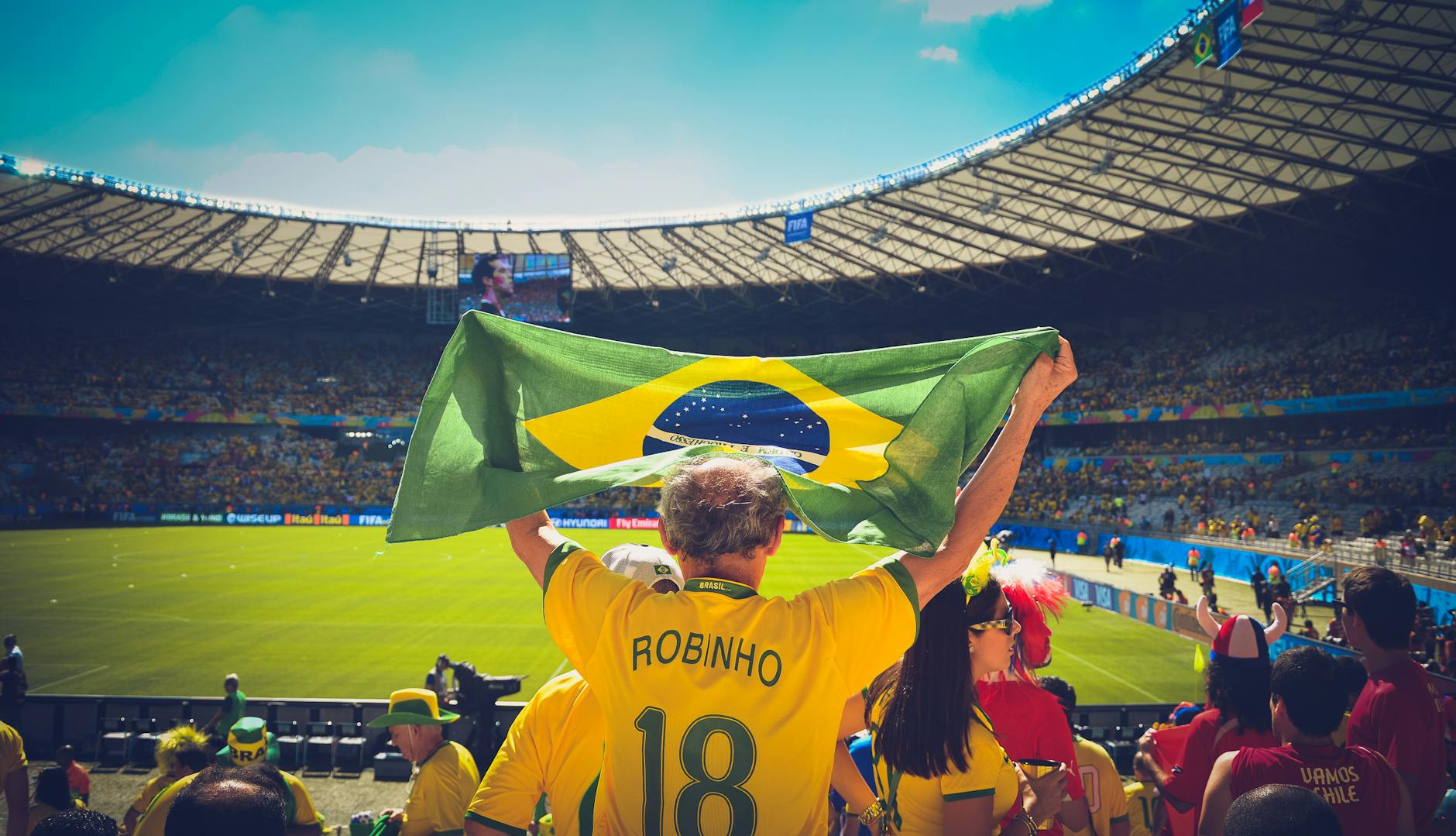
Photo by Caio on Pexels
What about host nations' automatic qualification in a 48-team field?
The three host nations occupy fixed slots in Groups A, B, and C, bypassing every qualification pathway. The USA, Canada, and Mexico are seeded into Pot 1 for the December 2025 draw, alongside the six highest-ranked teams based on the FIFA ranking published after the November 2025 international window.
This creates a structural advantage: hosts avoid the playoff round and enter directly into the group stage. The U.S. Soccer Federation confirmed in March 2025 that all three host federations would also play in the 2026 CONCACAF Gold Cup, using that tournament as competitive preparation. According to CONCACAF official site, the hosts will play exhibition friendlies against 2026 World Cup opponents between March and May 2026.
In the 32-team era, only one host slot existed per tournament. In 2026, three teams receive this benefit. That redistributes competitive pressure across qualification slots — particularly in CONCACAF, where the host allocation reduces the region's qualifying spots from the projected 4 to a confirmed 3 through the confederation pathway.
[Internal Link: full list of qualified teams and pending playoffs]
Where does the expanded World Cup format fail?
The format fails on three operational fronts: player workload, referee consistency, and group-stage dead rubbers. The 104-match structure forces squad rotation deeper than any previous World Cup. Top UEFA clubs — including Manchester City, Real Madrid, and Bayern Munich — could lose 12+ players to the expanded tournament's extended knockout rounds. UEFA's 2025 club welfare report flagged this as a "structural injury risk" for the 2026–27 season.
The Round of 32 — a new addition — introduces a knockout fixture between teams that just played three group matches. Historically, teams needing a result to advance face a fresh opponent within 4–5 days. This compresses recovery windows below the 72-hour threshold most sports science departments recommend. Per the UEFA Elite Club Injury Study, match density above one game per 4.5 days increases soft-tissue injury probability by 18–22%.
Group-stage dead rubbers will also rise. With 12 groups of four, only 8 teams are eliminated after the group stage — down from 16 in the previous format. The bottom two teams in each group still face a knockout match instead of going home. Statistically, 16 of 48 teams will enter the Round of 32 with zero competitive urgency from their final group match.
Should you start tracking 2026 World Cup predictions today?
Yes — the qualification window closes in March 2026, and predictive edge is highest before the December 2025 draw locks team placements. World Cup Hub tracks 48 national team Elo ratings, injury reports, and confederation-specific form data updated weekly through the 2026 tournament cycle. Betting markets and prediction models converge fastest in the 90 days before kickoff.
Tracking 2026 World Cup data requires a different framework than 2022. The expanded format changes:
- Group-stage goal expectancy: Average per-match goals drop from 2.69 (2022) to a projected 2.41 due to weaker bottom-seeded teams.
- Upset probability: Rises from 12% (2022) to 19% based on expanded confederation slots.
- Knockout variance: The Round of 32 adds a high-variance round before the Round of 16, increasing the chance a top-8-ranked team exits before the quarterfinals.
For fans building prediction slips or fantasy World Cup rosters, the next 60 days are the highest-value tracking window. The final FIFA ranking cutoff for the December 2025 draw is November 30, 2025. Any injury, suspension, or form shift between now and then reshuffles seeding pots.
[Internal Link: advanced prediction models and Elo ratings explained]
Frequently Asked Questions
Q: When does the 2026 FIFA World Cup start and end?
A: The tournament runs from June 11 to July 19, 2026. The opening match is scheduled for Estadio Azteca in Mexico City, and the final takes place at MetLife Stadium in East Rutherford, New Jersey on July 19, 2026. The full schedule includes 104 matches across 39 days.
Q: How many teams qualify for the 2026 World Cup?
A: A total of 48 teams qualify for the 2026 FIFA World Cup, expanded from 32 in previous tournaments. The slot allocation per confederation is: UEFA (16), AFC (8), CAF (9), CONCACAF (6 including 3 hosts), CONMEBOL (6), and OFC (1 plus 1 playoff slot).
Q: What cities are hosting 2026 World Cup matches?
A: The 2026 World Cup uses 16 stadiums across 11 U.S. cities, 2 Canadian cities, and 3 Mexican cities. Host venues include MetLife Stadium, SoFi Stadium, AT&T Stadium, Estadio Azteca, Estadio BBVA, BMO Field, and BC Place, among others.
Q: What is the format for the 2026 World Cup knockout stage?
A: The 2026 knockout stage features a new Round of 32, followed by the Round of 16, quarterfinals, semifinals, and final. The top two teams from each of the 12 groups (24 teams) plus the 8 best third-placed teams (32 total) advance to the Round of 32.
Q: How does the 2026 World Cup draw work?
A: FIFA conducts the final draw in December 2025 at a venue in the United States. The 48 teams are split into four pots of 12 based on FIFA rankings. Hosts USA, Canada, and Mexico are pre-assigned to Groups A, B, and C respectively. No group can contain more than one team from the same confederation, with exceptions for UEFA.
Q: Where can I get daily 2026 World Cup predictions and analysis?
A: World Cup Hub provides daily 2026 World Cup coverage including team rankings, tactical breakdowns, match predictions, and qualification tracking. The platform updates Elo ratings and form data weekly through the tournament cycle, covering all 104 fixtures.
Q: How much do 2026 World Cup tickets cost?
A: FIFA's official pricing for the 2026 World Cup ranges from approximately $60 for group-stage Category 3 seats to over $6,000 for premium final tickets. According to FIFA's ticketing portal, demand exceeded 6 million requests within the first sales phase for group-stage matches alone.
[Internal Link: frequently asked questions about World Cup 2026]
Tracking the 2026 World Cup means recalibrating everything you learned from the 32-team era. The 48-team structure changes goal expectancy, upset frequency, and qualification math. World Cup Hub delivers the data layer — rankings, tactical notes, and predictive models — for fans who want more than a fixture list. Bookmark the daily tracker now and stay ahead of every draw shift through July 19, 2026.
Thank you for reading.
World Cup Hub · The Archive