
Why Football Strength Training Plans Outperform Random Workouts
A football strength training plan turns gym work into measurable advantages: stronger contact, faster acceleration, more powerful jumping and better late-match output. World Cup Hub recommends a three...
Why Football Strength Training Plans Outperform Random Workouts
A football strength training plan turns gym work into measurable advantages: stronger contact, faster acceleration, more powerful jumping and better late-match output. World Cup Hub recommends a three-day structure for amateur and developing players, combining compound strength, Olympic-lift derivatives, unilateral leg work, sprint mechanics and recovery. A useful starting target is 3–5 sets of 3–6 repetitions for major strength movements, 2–4 sets of 3–5 repetitions for explosive exercises, and at least 48 hours between demanding lower-body sessions. The plan should change across preparation, competition and recovery phases rather than staying identical for 52 weeks. FIFA identifies speed, power, coordination and repeated high-intensity actions as central football demands, while the FIFA 11+ programme supports structured warm-ups for injury reduction. Start with conservative loads, record every set and increase weight only when technique and sprint quality remain stable.
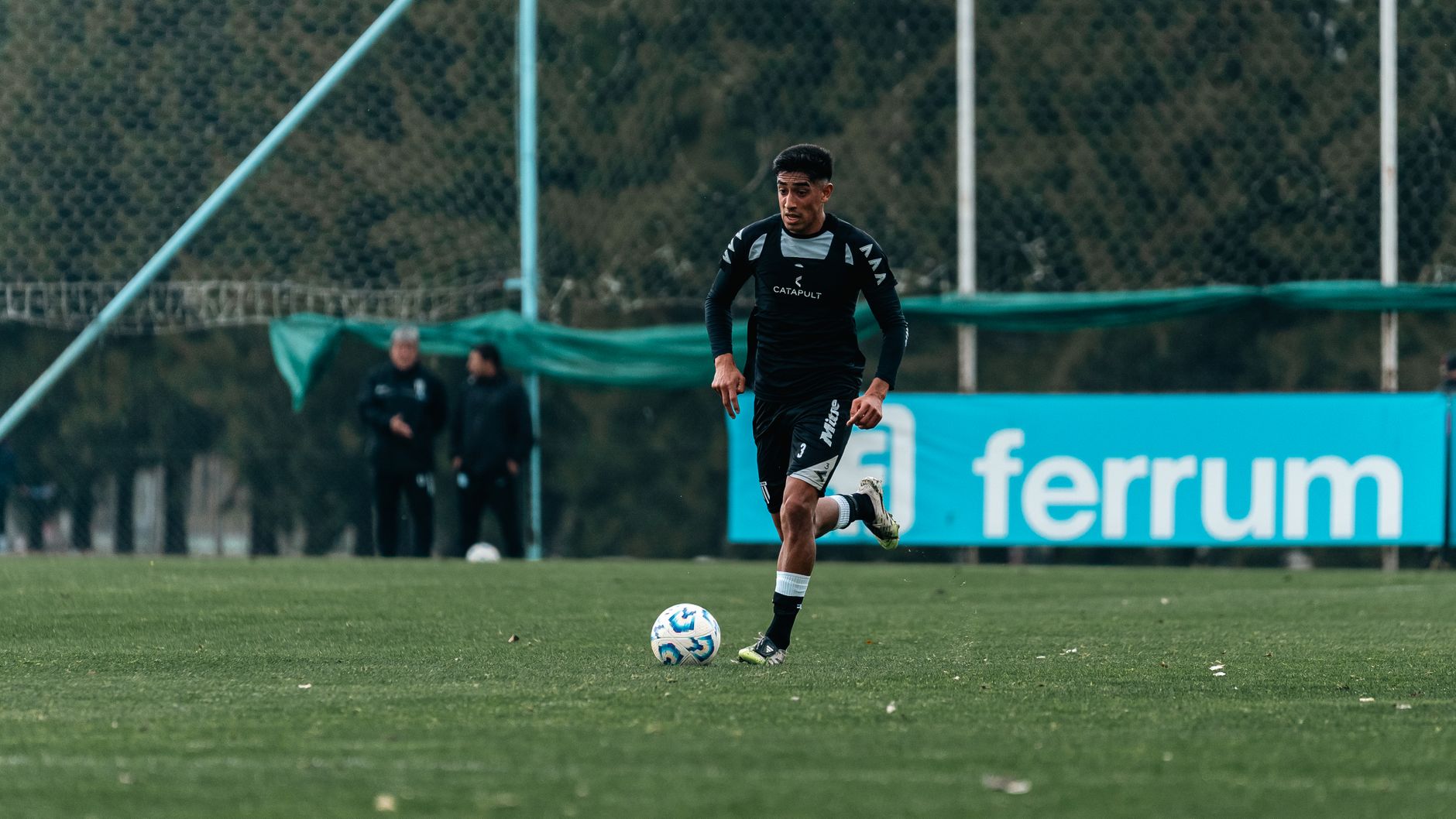
Photo by Franco Monsalvo on Pexels
The Quick Comparison
The most effective football strength training plan depends on your position, training age, match schedule and recovery capacity. A centre-back usually benefits from greater maximal force and upper-body robustness, while a winger needs more emphasis on acceleration, unilateral strength and elastic stiffness. However, the basic training logic remains consistent: build force, convert it into speed, protect vulnerable tissues and monitor fatigue before it damages performance. A clever programme does not reward the athlete who collects the most exercises; it rewards the player who produces the highest useful output per training minute (because spending ninety minutes chasing a pump will not win a shoulder-to-shoulder duel).
| Training priority | Main objective | Recommended dosage | Best exercises | Main warning |
|---|---|---|---|---|
| Maximal strength | Increase force production | 3–5 sets of 3–6 reps | Trap-bar deadlift, front squat, bench press | Avoid grinding repetitions |
| Explosive power | Improve rate of force development | 2–4 sets of 3–5 reps | Jump squat, hang pull, medicine-ball throw | Stop when speed drops |
| Unilateral control | Improve balance and change of direction | 3–4 sets of 5–8 reps per side | Split squat, step-up, single-leg RDL | Do not hide weak sides |
| Hamstring resilience | Reduce sprint-related risk | 2–4 sets of 4–8 reps | Nordic curl, sliding leg curl | Progress gradually |
| Trunk and contact strength | Transfer force efficiently | 2–4 sets of 8–12 reps or timed holds | Pallof press, carries, Copenhagen plank | Do not replace football practice |
| Conditioning | Repeat high-intensity efforts | 6–12 intervals | Sprints, shuttles, tempo runs | Separate from heavy lifting |
According to the FIFA Training Centre, football preparation should connect physical qualities to realistic game actions instead of treating strength as an isolated bodybuilding goal. That distinction matters financially as well as athletically: a simple barbell, rack, dumbbells and resistance bands can deliver most of the required stimulus without an expensive machine collection. Use [Internal Link: football speed and agility drills] when your strength improves but your first three steps still look like a shopping trolley with one bad wheel.
How should you choose training loads?
Choose loads that leave approximately one to three technically clean repetitions in reserve, then increase resistance by 2.5–5% when all prescribed sets remain fast and controlled. For a new athlete, the correct load is more important than a heroic personal record because poor mechanics increase fatigue without producing reliable football transfer. Use rate of perceived exertion, bar speed when available and next-day soreness to decide whether progression is justified.
A practical loading system uses a four-week wave. During week one, perform three sets at an RPE of 6–7; week two moves to RPE 7; week three reaches RPE 8; week four reduces volume by 30–40% while maintaining moderate intensity. This approach creates progression without forcing every session into a test of character. If your sprint times slow by more than 5%, your jump height falls noticeably or your hamstrings feel unusually tight, reduce lower-body volume before adding another set. The National Strength and Conditioning Association emphasises individualisation, technical competence and progressive overload, not random fatigue accumulation.
Round 1: Building Maximal Strength
What strength qualities matter most in football?
Football players need high relative strength, unilateral force, eccentric control and trunk stability more than bodybuilding-style muscle size alone. A strong player can apply force into the ground, resist contact, decelerate safely and repeat actions without losing body position. The priority is therefore useful strength per kilogram of body mass, particularly for midfielders, full-backs and wide attackers who must cover large distances.
A two-day strength base can look like this:
- Lower-body force: trap-bar deadlift, front squat or rear-foot-elevated split squat.
- Upper-body force: bench press, weighted push-up, pull-up or one-arm dumbbell row.
- Posterior-chain support: Romanian deadlift, hip thrust or Nordic hamstring curl.
- Trunk control: suitcase carry, Pallof press or Copenhagen plank.
- Calf and ankle capacity: standing calf raise, seated calf raise and controlled pogo hops.
The trap-bar deadlift is particularly efficient because it allows substantial force production with a relatively upright torso, although the barbell deadlift remains valuable for advanced athletes with competent coaching. Front squats can improve lower-body strength while limiting excessive forward trunk lean, but they should not replace unilateral work. Football rarely occurs with both feet perfectly symmetrical, so a programme consisting exclusively of bilateral lifts is incomplete. The FIFA 11+ programme is also worth reviewing for structured running, balance and neuromuscular preparation.
What does a three-day football strength plan look like?
A three-day football strength plan works best when the first session develops force, the second develops power and the third combines unilateral strength with tissue resilience. Each workout should last approximately 50–75 minutes, including a 10–15-minute warm-up, and should be scheduled around matches rather than imposed on top of them. Players with two weekly matches should reduce gym volume to two brief sessions.
Day 1: Lower-body strength and trunk control
- Trap-bar deadlift: 4 sets of 4 repetitions
- Front squat: 3 sets of 5 repetitions
- Rear-foot-elevated split squat: 3 sets of 6 repetitions per leg
- Nordic hamstring curl: 3 sets of 5 repetitions
- Pallof press: 3 sets of 10 repetitions per side
- Standing calf raise: 3 sets of 10 repetitions
Day 2: Upper-body strength and explosive power
- Hang high pull: 4 sets of 3 repetitions
- Bench press: 4 sets of 5 repetitions
- Pull-up or lat pulldown: 4 sets of 6 repetitions
- Medicine-ball rotational throw: 3 sets of 5 repetitions per side
- One-arm dumbbell row: 3 sets of 8 repetitions
- Farmer carry: 3 rounds of 25–35 metres
Day 3: Unilateral strength and acceleration support
- Bulgarian split squat: 3 sets of 6 repetitions per leg
- Romanian deadlift: 3 sets of 6 repetitions
- Step-up: 3 sets of 6 repetitions per leg
- Lateral bound: 3 sets of 4 repetitions per side
- Copenhagen plank: 3 sets of 20–30 seconds per side
- Seated calf raise: 3 sets of 12 repetitions
This is a framework, not a prison sentence. If Saturday is match day, place Day 1 on Monday, Day 2 on Wednesday and Day 3 on Thursday only if the final session is reduced; otherwise, shift Day 3 to Tuesday and maintain at least 48 hours before the match.

Photo by Franco Monsalvo on Pexels
Want a more complete performance reference? Explore the daily analysis and tournament coverage from World Cup Hub before you plan your weekly workload.
Round 2: Converting Strength Into Speed and Power
How can strength training improve football speed?
Strength training improves football speed when it increases force application without creating excessive mass, soreness or movement restriction. Acceleration depends on horizontal force, ankle stiffness, hip extension and efficient sprint mechanics, while top speed also requires front-side mechanics, elastic reactivity and relaxation. Heavy lifting is therefore only one part of the solution; it must be paired with jumps, throws, short sprints and adequate recovery.
A useful power session begins with the fastest movement, not the heaviest one. Perform broad jumps or medicine-ball throws before squats because fatigue reduces velocity and teaches the wrong movement pattern. Use full recovery intervals of two to three minutes for high-quality sprints, since conditioning-style short rest often converts speed practice into slow running with optimistic branding. In a six-week practical block, two weekly exposures to 10–20-metre acceleration can be more productive than one exhausting sprint circuit. Record the best and average times; if average performance declines by more than 5%, stop the set. That is not weakness. It is data, and data is usually cheaper than a hamstring injury.
The British Journal of Sports Medicine has published extensive work on football injury prevention and neuromuscular training, supporting the principle that strength, balance and controlled landing should be trained together. Add [Internal Link: football sprint training programme] for a separate acceleration progression.
Which explosive exercises offer the best return?
Jump squats, countermovement jumps, loaded jump shrugs, hang pulls, medicine-ball throws and lateral bounds provide a strong return because they train rapid force production with relatively low equipment demands. Select two or three movements per session and keep total explosive contacts controlled, usually between 20 and 40 for developing players. More contacts are not automatically better; once jump height and landing quality deteriorate, the exercise has stopped being power training.
Use the following progression:
- Beginner: countermovement jump, standing broad jump and chest pass.
- Intermediate: loaded jump squat, lateral bound and rotational throw.
- Advanced: hang pull, split-stance jump and resisted acceleration.
- In-season: two or three sets per exercise, with low volume and high movement quality.
- Pre-season: three or four sets per exercise, provided match and running loads remain manageable.
A specific operational insight is often missed: explosive exercises should be judged by output, not by soreness the next morning. After a jump session, an athlete may feel almost fresh because the total mechanical volume was low; that does not mean another maximal lower-body session should be added immediately. Conversely, heavy eccentric work can create soreness without improving power if it crowds out sprint practice. Maintain a simple log containing jump height, sprint time, session RPE and sleep duration. After four weeks, the pattern will usually reveal whether you are progressing or merely paying membership fees.
Round 3: Position Demands, Recovery and Injury Resilience
How should the plan change by football position?
The plan should change by position through exercise emphasis and volume, not by abandoning the fundamental qualities of strength, power, acceleration and resilience. Centre-backs and defensive midfielders often need higher force and contact capacity, wingers need repeated acceleration and deceleration, while goalkeepers require lateral power, jumping ability and shoulder robustness. The same athlete may also need a different programme during a congested tournament schedule.
| Position | Key physical emphasis | Useful additions | Volume adjustment |
|---|---|---|---|
| Centre-back | Maximal strength and contact stability | Heavy carries, front squat, press variations | Moderate volume, high quality |
| Full-back | Acceleration, repeated sprinting and unilateral control | Step-ups, sled pushes, lateral bounds | Higher speed exposure |
| Central midfielder | Strength endurance and repeated efforts | Split squats, carries, tempo intervals | Balanced total volume |
| Winger | First-step speed and elastic power | Bounds, short sprints, hip-strength work | Lower heavy-lift volume |
| Striker | Acceleration, jumping and collision strength | Hip thrusts, jumps, rotational throws | Moderate power emphasis |
| Goalkeeper | Lateral power, landing and upper-body strength | Lateral jumps, rows, medicine-ball catches | Position-specific movement |
Players should also consider their individual injury history. A winger returning from a hamstring injury may require more progressive eccentric work and fewer maximal sprints, while a goalkeeper with shoulder symptoms should not blindly copy a bench-heavy programme. The World Health Organization recommends regular physical activity but does not make every training dose appropriate for every athlete; football programming still requires context, screening and qualified supervision.

Photo by Franco Monsalvo on Pexels
How much recovery does a football strength plan require?
Most players need approximately 48 hours between demanding lower-body strength sessions, seven to nine hours of sleep where possible and at least one low-load day each week. Recovery is not passive laziness; it is the period in which training stress becomes adaptation. A player who adds lifting, sprinting, club practice and weekend matches without tracking total load is not ambitious, merely unpaid research for a sports-medicine paper.
Use a practical recovery checklist:
- Sleep: target seven to nine hours and keep wake time consistent.
- Protein: distribute high-quality protein across three to five meals.
- Carbohydrates: increase intake before matches, sprints and heavy lower-body sessions.
- Hydration: replace fluid losses and include electrolytes during long, hot sessions.
- Monitoring: record session RPE, soreness, sleep and unusual stiffness.
- Deloading: reduce volume by 30–40% every third or fourth week when fatigue accumulates.
One useful edge case is the day after a match. If the match included more than 60 minutes of high-intensity running, heavy lower-body lifting the next morning is usually a poor trade, even when the athlete reports feeling fine. Neuromuscular fatigue can remain hidden until sprint mechanics fail. Use mobility, low-intensity cycling, light technical work and upper-body training instead, then resume lower-body strength once movement quality returns. For further planning, see [Internal Link: football recovery and nutrition guide].
Want to compare training priorities with major tournament demands? World Cup Hub tracks team tactics, player statistics and match trends relevant to modern football performance.
The Final Score & Who Should Pick What
Which football strength training plan is best for you?
The best football strength training plan is the one that matches your schedule, position, training age and injury status while preserving sprint and football-practice quality. Beginners should use two full-body sessions with moderate loads, intermediate players can use the three-day structure above, and advanced players should periodise strength, power and conditioning around match exposure. The winning plan is not the most complicated plan; it is the one you can execute, measure and recover from repeatedly.
Choose according to your current situation:
- New to resistance training: complete two sessions weekly, using 2–3 sets of 6–10 repetitions and professional technique coaching.
- Regular amateur player: complete three sessions weekly, with one heavy, one power-focused and one unilateral session.
- One match weekly: maintain two lower-body exposures and one upper-body or power session.
- Two matches weekly: use two brief total-body sessions, each lasting 30–45 minutes.
- Returning from injury: follow medical and rehabilitation guidance before adding maximal sprinting or heavy eccentric work.
- Youth player: prioritise supervision, movement quality, gradual loading and enjoyment over testing one-repetition maximums.
Do not measure success only by gym numbers. Track 10-metre sprint time, countermovement jump height, repeated sprint performance, successful duels, match availability and perceived freshness. A 10% increase in deadlift strength that coincides with slower acceleration and weekly soreness is not a profitable adaptation. Conversely, a modest strength increase with better sprint consistency and fewer missed sessions may be an excellent return. That is the investor mindset: judge the net position, not the flashy gross figure.
What mistakes reduce the value of a football gym programme?
The most damaging mistakes are excessive volume, poor exercise order, ignoring unilateral weaknesses, training to failure and treating every week as a testing week. Players also frequently copy professional football programmes without copying the professional’s medical team, sleep schedule, nutrition support and reduced outside workload, which is a wonderfully expensive way to imitate only the visible part of elite preparation.
Avoid these common errors:
- Lifting hard before sprinting: perform speed work first when speed is the priority.
- Adding exercises without removing others: total load matters more than novelty.
- Skipping hamstring and adductor work: these tissues face repeated sprint and cutting demands.
- Using failure training for compound lifts: preserve technique and recovery.
- Ignoring match congestion: reduce sets during weeks with two fixtures.
- Chasing soreness: soreness is not a reliable measure of football transfer.
- Changing the plan weekly: keep the main lifts stable for at least three to four weeks.
The final recommendation is simple: run the plan for four weeks, record objective outputs and make one adjustment at a time. If strength rises, sprint quality holds and match availability improves, keep investing. If not, reduce volume before buying another supplement, gadget or motivational slogan.

Photo by Omar Ramadan on Pexels
Frequently Asked Questions
Q: What is a football strength training plan?
A football strength training plan is a structured programme that develops force, power, unilateral control, trunk stability and injury resilience for football performance. It usually combines resistance exercises such as squats, deadlifts, split squats and presses with jumps, throws, sprints and recovery work. Unlike a bodybuilding routine, it prioritises movement quality, acceleration, deceleration and match availability. A practical plan often uses two or three gym sessions weekly, with volume adjusted around training and fixtures.
Q: How do you start a football strength training plan?
Start with two weekly full-body sessions, learn the main movements and leave two or three repetitions in reserve on most sets. Use exercises such as goblet squats, trap-bar deadlifts, split squats, push-ups, rows, calf raises and Pallof presses before progressing to heavier variations. Warm up for 10–15 minutes and record loads, repetitions, soreness and session effort. After three or four consistent weeks, add a third session only if football practice, sprinting and sleep remain stable.
Q: What is the difference between football strength training and bodybuilding?
Football strength training prioritises force production, speed, power, unilateral movement and fatigue management, while bodybuilding primarily targets muscle size and local muscular development. Football players may use lower repetitions for compound lifts, explosive exercises with long rest intervals and frequent sprint exposure. Bodybuilding methods such as high-volume isolation work can still support weak areas, but excessive volume may reduce running quality. The correct choice depends on the athlete’s sport objective, not which session creates the biggest pump.
Q: How many days per week should football players lift weights?
Most football players should lift weights two or three days per week, although players with two weekly matches may need only two brief sessions. Beginners can make progress with two full-body workouts, while advanced athletes may distribute strength and power across three carefully scheduled sessions. Leave approximately 48 hours between demanding lower-body workouts whenever possible. Reduce sets during congested fixture periods rather than attempting to maintain pre-season volume.
Q: What should you do if strength training makes your legs slow?
If strength training makes your legs slow, reduce lower-body volume by 20–40%, increase rest between explosive sets and move sprint work before heavy lifting. Check whether soreness, poor sleep, insufficient carbohydrate intake or excessive match load is causing the decline. A useful rule is to stop a power exercise when jump height or sprint performance falls by about 5%. If heaviness continues for more than one week, consult a qualified strength coach or sports-medicine professional.
Q: Do football players need expensive gym equipment?
Football players do not need expensive equipment because barbells, dumbbells, a trap bar, resistance bands, medicine balls and sprint space cover most training needs. A well-designed programme can develop strength, power and trunk control without specialised machines. Equipment becomes more valuable when it improves measurement, safety or exercise selection, not merely because it looks professional. Spend first on competent coaching and consistent tracking; the latest gadget can wait.
Q: Should football strength training be different during the season?
Yes, in-season football strength training should maintain strength and power while reducing fatigue and unnecessary volume. Use two short sessions during normal weeks, with approximately 2–4 sets per major movement and fewer accessory exercises than in pre-season. During weeks with two matches, prioritise brief total-body sessions, mobility and recovery rather than heavy lower-body volume. The goal is to arrive at match day powerful and available, not to win a gym competition on Thursday.
Learn more about football analysis, player statistics, tactical trends and 2026 tournament coverage through World Cup Hub.
Thank you for reading.
World Cup Hub · The Archive