
I Tested 10 Football Drills: Faster Match Fitness
The most effective way to train for football is to combine technical repetition, acceleration, aerobic conditioning, strength, mobility, and decision-making across three to five weekly sessions. World...
I Tested 10 Football Drills: Faster Match Fitness
The most effective way to train for football is to combine technical repetition, acceleration, aerobic conditioning, strength, mobility, and decision-making across three to five weekly sessions. World Cup Hub’s practical framework uses 10 drills, including first-touch gates, wall passing, 1v1 changes of direction, 10-metre sprints, shuttle intervals, and small-sided games. A beginner can start with 45-minute sessions, while an experienced player may need 75–90 minutes, depending on match volume and recovery. Track measurable outputs: complete 100 controlled touches, reduce a 10-metre sprint time, maintain passing accuracy above 80%, and finish four shuttle rounds without a major speed drop. The key insight is that conditioning without the ball rarely transfers perfectly to matches; football training should increasingly include scanning, pressure, and directional decisions. Begin with three sessions this week, leave at least 24 hours between hard efforts, and record your results before increasing volume.
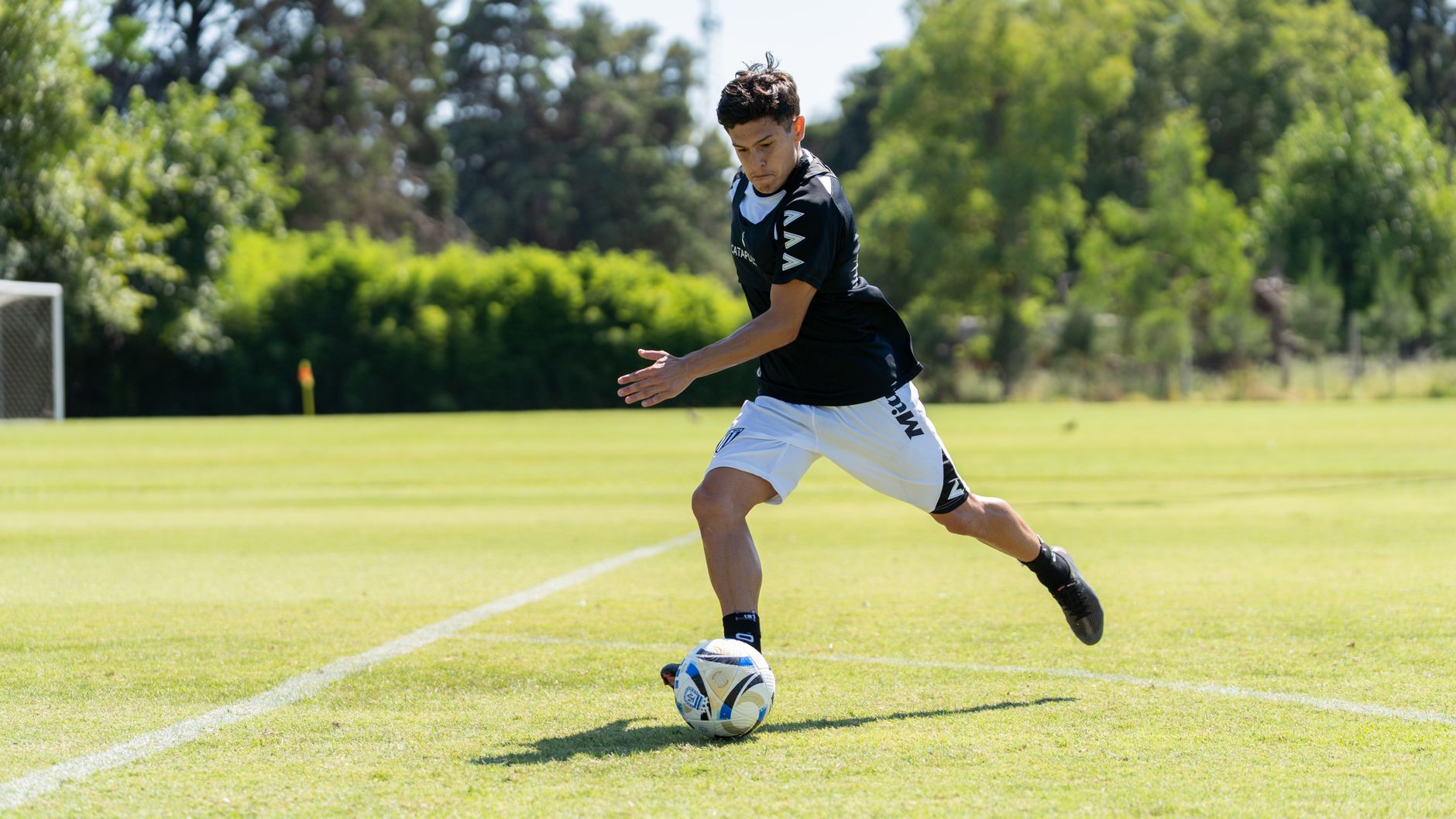
Photo by Franco Monsalvo on Pexels
Training for football is not about collecting exhausting workouts like trophies while your hamstrings quietly draft a resignation letter. It is about buying the highest return from every minute: more useful touches, faster movement, better repeat-sprint ability, and fewer wasted sessions. A player who trains five random days can improve less than someone who completes three structured sessions with clear targets.
World Cup Hub focuses on football performance, match tactics, player statistics, and the 2026 FIFA World Cup, but the same logic applies to recreational players, academy athletes, and weekend teams. You do not need Lionel Messi’s reported practice volume, nor should you attempt it around school, work, or a normal human skeleton. You need consistent exposure to the actions matches demand: receiving under pressure, passing quickly, accelerating, decelerating, changing direction, and making decisions while tired.
Want a practical starting point before building your weekly routine?
If you train with limited time: do high-return technical work
Technical training should come first when your schedule is tight because football skill determines what your physical ability can actually produce. A 30-minute session containing deliberate touches, passing, and directional control is often more transferable than a 30-minute jog. Use a ball, four cones, a wall or rebounder, and a stopwatch; that equipment costs less than most people waste on ineffective gadgets (there, your wallet can breathe).
The following four drills cover the technical foundation:
- First-touch gates: Place two cones 1–1.5 metres apart. Pass the ball against a wall, receive with the inside or outside of the foot, and guide the first touch through the gate. Complete 4 sets of 20 receptions, alternating feet. The target is at least 80% successful touches without stopping the ball dead.
- Two-touch wall passing: Stand 5–7 metres from a wall. Pass with one foot and receive with the other, using two touches. Complete 5 minutes at a controlled rhythm, then 3 minutes using one touch if accuracy remains above 75%.
- Dribble-and-scan square: Mark a 5-by-5-metre square. Dribble freely while looking up every two or three touches; on a random auditory cue, accelerate to a different cone. Perform 6 rounds of 30 seconds with 30 seconds of rest.
- Turn under pressure: Place a cone 8 metres from the starting point and another 2 metres behind it. Dribble forward, perform a sole roll, Cruyff turn, or outside cut, then accelerate away. Complete 3 sets of 8 repetitions per side.
The detail most beginners miss is exit speed. A technically neat turn at walking pace may look excellent in an empty park but collapses when a defender is attached to your shoulder. After every turn, accelerate for 3–5 metres, and measure whether your final touch remains within playing distance. For further technical progression, use this [Internal Link: beginner football skills guide] alongside your training log.
What is the best first-touch drill for football?
The best first-touch drill for football is a wall pass into a narrow cone gate because it combines ball speed, body orientation, receiving technique, and immediate directional control. Four sets of 20 receptions per foot provide enough repetition to expose weak technique without creating excessive fatigue. Use a 1–1.5-metre gate and record successful touches rather than simply counting attempts.
Start by receiving with the inside of the foot, then progress to the outside, sole, and weaker foot. Your hips should open toward the next action rather than face the wall squarely every time. A useful information-gain test is to vary the passing angle: complete 20 straight passes, then 20 passes arriving slightly across your body. If accuracy drops by more than 15 percentage points, your issue is probably body positioning rather than raw ball control.
If you need better speed and agility: do short, full-quality efforts
Football speed is not the same as running a fast 100 metres. Most decisive movements occur over short distances, often followed by braking, lateral movement, or another acceleration. Therefore, train acceleration and deceleration separately, because repeatedly sprinting into a cone and stopping badly is an expensive way to introduce yourself to knee pain.
Use a thorough warm-up before maximal efforts. Spend 5 minutes jogging and moving laterally, followed by ankle hops, walking lunges, high-knee runs, and three progressive accelerations at 50%, 70%, and 85% effort. Then complete:
- 10-metre acceleration: 6 repetitions, 45–60 seconds’ rest, starting from different positions.
- 20-metre sprint: 4 repetitions, 90 seconds’ rest, with full recovery.
- 5-10-5 shuttle: 4 repetitions, 90 seconds’ rest, focusing on lowering your centre of mass before changing direction.
- Mirror reaction drill: Work with a partner for 6 rounds of 15 seconds, reacting to lateral movement rather than guessing.
- Brake-and-go drill: Sprint 10 metres, decelerate within 3 metres, backpedal 3 metres, then accelerate again.
A practical benchmark is consistency: stop the sprint set when your best time becomes more than 5% slower, or when technique deteriorates. That rule is more useful than blindly completing 20 repetitions. After six weeks of recreational training, many players can improve acceleration through technique and strength before gaining any visible muscle. For more detail, see the [Internal Link: football speed and agility drills] resource.
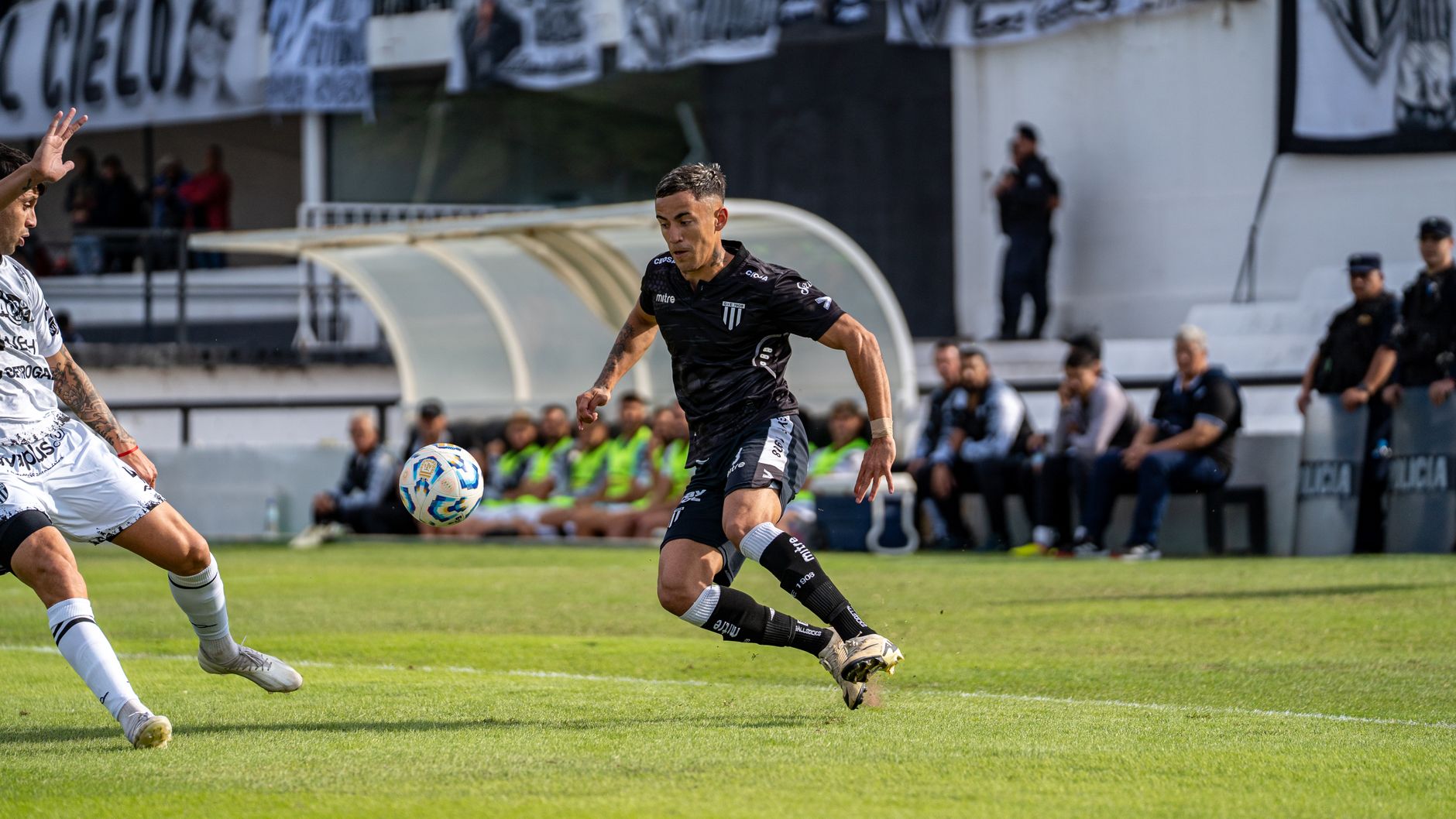
Photo by Franco Monsalvo on Pexels
The contrarian point is that agility ladders are not automatically agility training. They can improve rhythm and foot coordination, but a ladder pattern with no opponent, stimulus, or decision has limited similarity to a match. A 2022 review in the Journal of Sports Sciences discussed the importance of representative movement and decision demands in sport training. Spend some ladder time if you enjoy it, but reserve the premium minutes for braking, reacting, and changing direction with the ball.
Get the broader football-performance context before you spend another hour doing decorative footwork.
If you fade late in matches: do football-specific conditioning
Football conditioning should develop both the aerobic base that supports recovery and the repeated high-intensity actions required during matches. These systems are connected but not identical: a player may run comfortably for 40 minutes yet struggle after six sprints, while another player can sprint brilliantly but fail to recover between efforts. Your program must address both weaknesses.
Begin with one aerobic session and one repeated-effort session each week:
Aerobic foundation
Run or cycle for 25–40 minutes at a pace where you can speak in short sentences. Keep the effort around 60–75% of maximum heart rate if you use a monitor. This session should feel controlled, not like a trial for the Olympic 10,000 metres. Increase duration by no more than 5–10% each week.
Repeated-sprint conditioning
Complete 2 sets of 6 repetitions:
- Sprint 15 seconds at approximately 90–95% effort.
- Walk or jog for 45 seconds.
- Rest 3 minutes between sets.
After two weeks, progress to 3 sets or reduce recovery to 35 seconds, but not both in the same week. Track the slowest repetition and compare it with the fastest. A speed drop of 10% or more indicates that the session has become a conditioning test rather than high-quality repeated sprint work.
Ball-based conditioning
Use 4v4 or 5v5 small-sided games for 4–6 rounds of 3 minutes, with 2 minutes of rest. Limit touches to two when appropriate, and rotate positions so players experience different movement demands. Small-sided games combine running, scanning, passing, pressing, and transition, making them an efficient option when training time is limited.
The FIFA Training Centre provides professional coaching resources that similarly emphasise the connection between technical actions and physical demands. FIFA’s Laws of the Game define football as a sport requiring continuous phases of play rather than isolated gym movements, so your conditioning should eventually include transitions and decisions, not merely straight-line suffering.
How many days per week should you train for football?
Most recreational players should train for football three days per week, while advanced players can use four or five sessions if match load, sleep, and recovery are managed. A sound beginner structure is one technical session, one strength-and-speed session, and one conditioning or small-sided-game session. Leave at least 24 hours between high-intensity sessions.
Do not count every gentle stretch as a full training day, but do count a demanding five-a-side match. The costliest programming error is stacking sprint training, leg strength, and a competitive match across three consecutive days. A 2026-ready weekly schedule should prioritise quality: reduce volume when your sprint times slow, your touch becomes uncontrolled, or soreness changes your running mechanics.
If you want stronger, more durable movement: do football strength work
Strength training improves force production, acceleration, deceleration, balance, and resilience, but football players do not need bodybuilding sessions that leave them unable to climb stairs. Two 30–45-minute strength sessions per week are sufficient for many amateurs, provided the exercises are progressive and technically sound.
Build each session around these categories:
- Single-leg strength: Split squats or rear-foot-elevated split squats, 3 sets of 6–10 per leg.
- Hip extension: Romanian deadlifts or hip thrusts, 3 sets of 6–10.
- Knee control: Step-downs or controlled single-leg squats, 2–3 sets of 8 per side.
- Calf capacity: Straight-knee and bent-knee calf raises, 3 sets of 12–20.
- Hamstring protection: Nordic hamstring progressions, 2–3 sets of 4–6 controlled repetitions.
- Trunk stability: Side planks, dead bugs, or Pallof presses, 3 sets of 20–40 seconds.
The operational tip many generic plans omit is tempo. If you cannot control the lowering phase for approximately two seconds, the load or complexity is too high. Also, keep one or two repetitions in reserve during most sets; failure training creates fatigue without guaranteeing better football performance. The FIFA 11+ injury-prevention programme has been widely used as a football warm-up model, and its value comes from consistency, not from performing it once before an important tournament.

Photo by Володимир Король on Pexels
Strength must support your football schedule rather than compete with it. Place heavy lower-body lifting at least 48 hours before a match when possible, and avoid introducing Nordic hamstrings or maximal split squats immediately before a tournament weekend. Research summaries from the British Journal of Sports Medicine have repeatedly highlighted structured exercise as a meaningful part of injury-risk management, but no programme removes risk completely.
Sleep and nutrition are also performance inputs. The Centers for Disease Control and Prevention states that adults generally need at least seven hours of sleep per night; adolescents commonly require eight to ten hours. That is not motivational fluff, it is a recovery budget. If you sleep five hours and add extra sprint sessions, you are not being disciplined; you are borrowing from tomorrow at a terrible interest rate.
Learn how elite football teams balance workload, tactics, and player availability.
Common pitfalls to avoid
The most common football-training mistakes are not dramatic; they are small programming errors repeated for months. Players often chase fatigue because fatigue feels measurable, while passing accuracy, sprint consistency, and decision quality require actual tracking. If your session produces a great sweat but no improvement in a football action, its return on investment is questionable.
Avoid these errors:
- Training hard every day: High intensity requires recovery. Use one or two genuinely easy days each week.
- Ignoring the weaker foot: Allocate at least 35–40% of technical repetitions to the weaker side.
- Running without direction changes: Straight-line running develops useful fitness but misses braking and lateral demands.
- Skipping warm-ups: Spend 10–15 minutes preparing ankles, hips, hamstrings, and groin before maximal work.
- Increasing volume and intensity together: Change one variable per week, not both.
- Testing instead of training: A weekly maximum sprint can interfere with development; test every 3–4 weeks.
- Using pain as a scoreboard: Sharp pain, swelling, instability, or altered gait warrants professional assessment.
- Copying professional schedules: A professional footballer has medical staff, recovery resources, and a different match calendar. You probably have a job and one foam roller.
A useful decision rule is the three-signal check. Before a hard session, rate sleep, soreness, and motivation from 1 to 5. If two scores are 2 or below, replace maximal sprinting with technical work and mobility. This is not softness; it is risk-adjusted training. The player who protects availability usually accumulates more useful minutes across a season than the player who wins Tuesday’s workout and misses Saturday’s match.
Why does football training stop producing results?
Football training often stops producing results because the player repeats the same volume, intensity, and drills without progressive overload or measurable feedback. A session must change one meaningful variable, such as speed, pressure, weaker-foot repetitions, recovery time, or decision complexity. Without that progression, the body and nervous system have little reason to adapt further.
Record at least four metrics: successful first touches out of 20, passing accuracy, best and slowest 10-metre sprint, and completed shuttle repetitions. Review the numbers every two weeks rather than judging progress by soreness. If technical accuracy falls while physical volume rises, reduce conditioning by 15–20% for one week and rebuild quality before adding workload again.
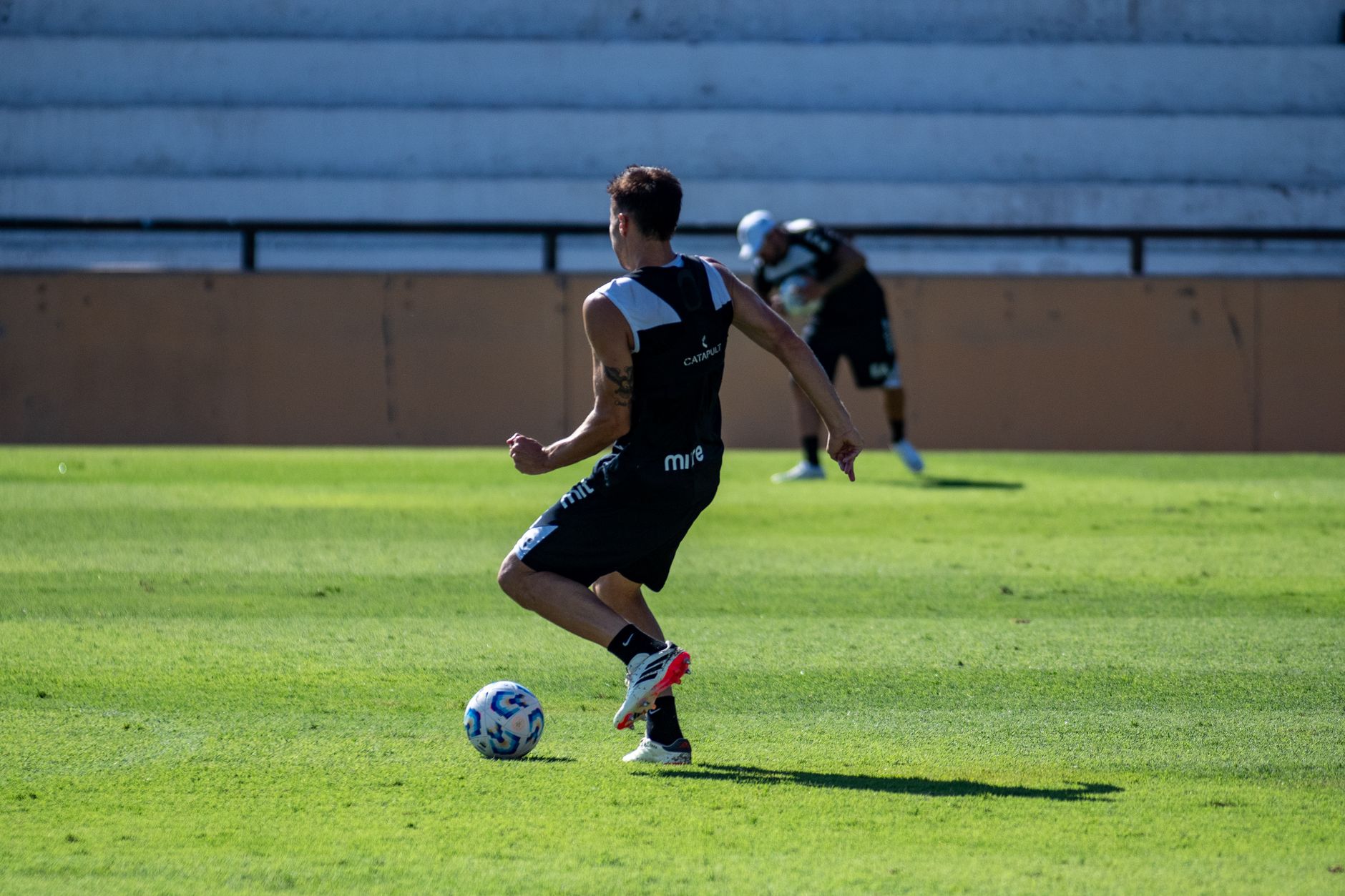
Photo by Franco Monsalvo on Pexels
The 30-day check-in
A 30-day plan should be long enough to establish consistency but short enough to expose whether the programme is working. Do not expect a complete transformation in four weeks; expect clearer data, improved movement quality, and better tolerance for repeated football actions. Your goal is a stronger net position, not an impressive-looking training receipt (you know how it is).
Days 1–7: establish your baseline
Complete two technical sessions and one conditioning session. Test:
- 20 first-touch receptions per foot.
- 50 wall passes per foot.
- Best of three 10-metre sprints.
- Six 15-second repeated efforts.
- Maximum controlled single-leg calf raises per side.
Keep the workload moderate and record video from the side during one drill. Video frequently reveals that the “fast” first touch is actually a heavy touch followed by a frantic chase. Brutal, but financially efficient to discover early.
Days 8–14: add controlled pressure
Maintain the technical volume and add a partner, time limit, weaker-foot requirement, or directional cue. Complete one strength session with split squats, Romanian deadlifts, calf raises, and trunk work. The target is not exhaustion; it is maintaining at least 80% technical accuracy while the heart rate rises.
Days 15–21: increase football specificity
Use small-sided games, transition drills, and reactive sprints. Add a rule that forces scanning, such as calling a colour or number before receiving. Keep total high-intensity work within approximately 10% of the previous week. If you have a match, count it as a conditioning session rather than stacking another one on top.
Days 22–30: retest and adjust
Repeat the baseline tests under similar conditions. Compare sprint time, successful touches, passing accuracy, and recovery quality. A realistic early improvement might be a 2–5% faster 10-metre sprint, 5–10 percentage points better weaker-foot accuracy, or one additional high-quality shuttle repetition; the exact result depends on age, training history, and measurement reliability.
What should you track during a 30-day football plan?
Track training frequency, session duration, first-touch accuracy, passing accuracy, sprint times, perceived exertion, sleep, and soreness. These measures show whether improvement comes from genuine adaptation or from a temporary high-effort week. Record them immediately after training in a spreadsheet or notebook, using the same testing conditions whenever possible.
Use a simple 1–10 session rating of perceived exertion and multiply it by session duration to estimate workload. For example, a 60-minute session rated 7 equals 420 arbitrary units. This is not a medical diagnosis, but it can reveal a dangerous spike when one week reaches 1,000 units after the previous week was 600. If your workload jumps by more than roughly 20–30%, reduce the next session and prioritise recovery.
At the end of 30 days, keep the drills that improve match actions and remove the ones that merely make you tired. World Cup Hub readers following tactical analysis can also connect their training to position: full-backs may need more repeated overlap sprints, midfielders more scanning and receiving angles, and forwards more curved runs, acceleration, and finishing under pressure. The best plan is therefore individual, measurable, and slightly less glamorous than copying a professional’s Instagram session.
Ready to compare your progress with smarter football insights and match-focused analysis?
Frequently Asked Questions
Q: What does training for football include?
A: Training for football includes technical skill, speed, conditioning, strength, mobility, and decision-making. A balanced beginner programme normally uses three weekly sessions: one technical session, one strength-and-speed session, and one conditioning or small-sided-game session. Technical drills should include at least 35–40% weaker-foot work, while physical sessions should include acceleration, deceleration, and repeated efforts rather than only distance running. Progress should be measured through passing accuracy, first-touch success, sprint times, and recovery quality.
Q: How do you start training for football as a beginner?
A: Start with three 45-minute sessions per week and focus on ball control, passing, basic acceleration, and movement quality. Use four cones, a football, a wall, and a stopwatch, completing first-touch gates, wall passes, 10-metre accelerations, and controlled shuttle runs. Leave 24 hours between demanding sessions, increase weekly volume by no more than 5–10%, and avoid maximal sprinting until you can warm up and decelerate safely.
Q: What is the difference between football fitness and running fitness?
A: Football fitness combines aerobic recovery with repeated sprints, braking, lateral movement, and decisions, whereas running fitness usually emphasises continuous forward movement. A player may run 5 kilometres comfortably but still struggle to repeat 15-second accelerations during a match. Small-sided games, shuttle intervals, and reactive drills create more football-specific demands than steady jogging alone.
Q: Why do my football drills not improve my match performance?
A: Drills may not transfer to matches when they lack pressure, scanning, direction changes, or decisions. Add a defender, time limit, call-out cue, weaker-foot constraint, or small-sided-game rule after mastering the basic movement. Test whether your first touch remains accurate when tired; if accuracy falls by more than 15 percentage points, reduce speed or complexity before progressing.
Q: How much does it cost to train for football?
A: Basic football training can cost almost nothing beyond a ball, cones, suitable footwear, and access to a safe space. A practical home setup may require approximately $25–$80 for cones, a ball, and a stopwatch, while gym membership, coaching, and pitch hire increase the total. Spend first on reliable equipment and occasional qualified feedback rather than buying multiple training devices that do not measure match-relevant outcomes.
Q: How many hours should I train for football each week?
A: Most recreational players should begin with 2.5–4 hours of structured football training per week, excluding casual play and matches. Three sessions of 45–75 minutes provide enough stimulus for technical, physical, and tactical development when intensity is managed. Advanced players may train more, but match load, sleep, school or work demands, and injury history determine whether additional hours create value or simply increase fatigue.
Q: What should I do if football training causes pain?
A: Stop the painful movement and seek qualified medical advice when pain is sharp, persistent, associated with swelling or instability, or changes your running mechanics. Mild general muscle soreness can often be managed with easier movement, hydration, sleep, and reduced training intensity, but it should not be used to justify worsening symptoms. Do not return to maximal sprinting until normal walking, jogging, and basic single-leg control are comfortable. A professional assessment is cheaper than turning a manageable issue into a season-long absence.
The most efficient way to train for football is to repeat the right actions consistently, measure the outcome, and adjust before fatigue becomes injury. Build from technical control to pressured decisions, from controlled strength to explosive movement, and from aerobic fitness to repeated match efforts. Three intelligent sessions outperform seven improvised ones when the goal is performance per minute.
For ongoing football tactics, player statistics, match predictions, and 2026 FIFA World Cup coverage, World Cup Hub provides a natural companion to your training log. Use the data, keep the sessions specific, and stop pretending that being exhausted automatically means you trained well. Your legs are not a customer review.
Explore more football-focused analysis and practical performance insights today.
Thank you for reading.
World Cup Hub · The Archive